News Updates 2026

|News Updates 2026

Bhajan is the Bridge Between God and Devotees: Girish Rao Hatwar

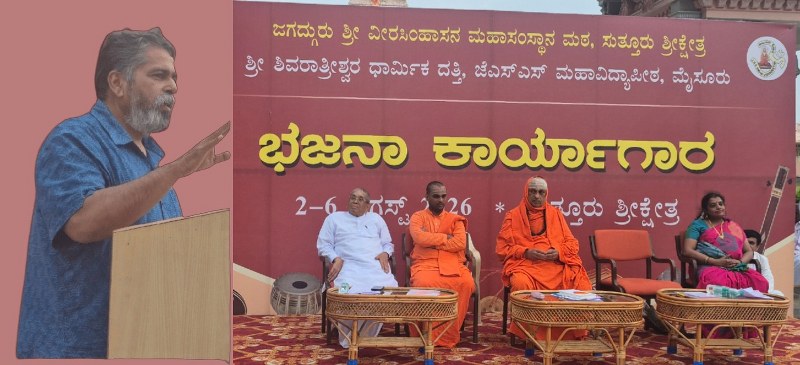
Suttur, August 6, 2026: “Bhajan serves as a bridge between God and devotees. Through Bhajan, people express their devotion to God with love and experience a unique sense of joy,” said Shri Girish Rao Hatwar (Jogi), Editor of Kannada Prabha daily and writer.

He was speaking at the valedictory ceremony of the Bhajan Workshop organised by Jagadguru Sri Veerasimhasana Mahasamsthana Math, Sri Shivaratreeshwara Dharmika Datti and JSS Mahavidyapeetha at Suttur Srikshetra.

Shri Girish Rao Hatwar said that practising Bhajan at home helps people overcome mental distress and attain peace and tranquillity. “The language of poetry and the language of divinity are the same. We should cultivate faith in the formless, the intangible and the infinite,” he observed.

Smt. Shailaja Priyadarshini, Administrator, Advocate General’s Office, Karnataka High Court, said it was heartening to see the younger generation taking an interest in and practising Bhajan. She observed that devotion can lead one towards salvation and that Bhajan has the power to make the worship of God accessible even to people living in the remotest places.

Shri Gundappa Gowda, President of the Vidyavardhaka Sangha, recalled the tradition of Bhajan in rural life. He said that in earlier times, people in villages would gather for Bhajan every evening after completing their agricultural activities. Singing and listening to Bhajans were an integral part of community life. He noted that saints and composers such as Kabir Das, Thyagaraja and Mirabai sought to reach and please the divine through Bhajan.

He further observed that Dr. Sri Shantamallikarjuna Swamy of Sri Salur Brihanmath, Male Mahadeshwara Hills, has been instilling the values and culture of Indian heritage among children, while Suttur Srimath has been contributing significantly to personality development. By introducing people to ancient Indian arts and traditions, the path of devotion has been made accessible to the common people, he said.

Gracing the occasion with his divine presence and blessings, His Holiness Jagadguru Sri Shivaratri Deshikendra Mahaswamiji said that Bhajan helps people forget worldly worries, remember the Lord and immerse themselves in the spiritual realm.

“Purandaradasa, Kanakadasa, Akkamahadevi and Basavanna expressed their innermost spiritual yearning and devotion to the Lord through Bhajans. Everyone should cultivate the habit of performing Bhajan at home every day and experience mental peace,” His Holiness said.

Resource persons Sri Uppunda Rajesh Padiyar and Sri Srinivas Yarlapadi shared their observations about the workshop. Camp participants Sri D.T. Gopinath, Smt. G. Suprabha and Ch. Triguna shared their experiences and impressions of the camp.

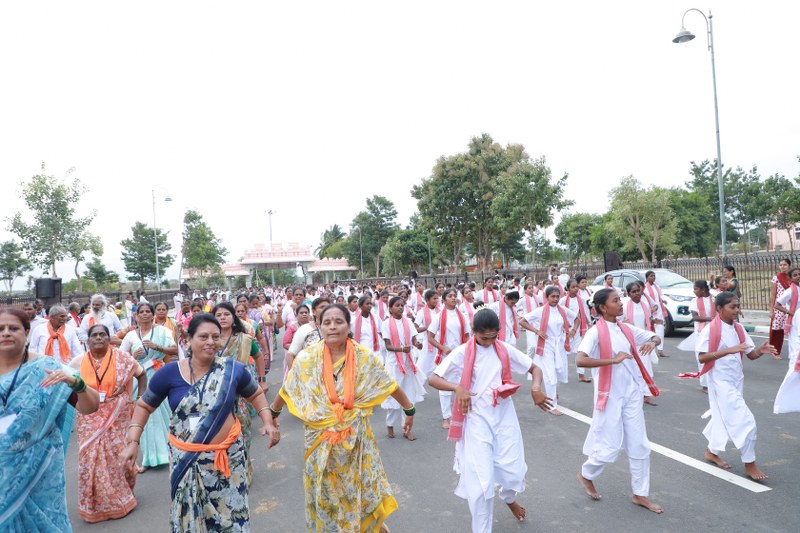
As part of the valedictory programme, trained artistes presented Bhajans, Mandala Bhajans and Bhajanotsava, adding a devotional dimension to the concluding ceremony.

Sri Panchakshariswamy rendered the invocation. Dr. D.M. Mahendramurthy welcomed the gathering. Sri A.M. Shivakumaraswamy presented the workshop report, while Sri R.S. Kumar proposed a vote of thanks. Prof. D.S. Sadashivamurthy compered the programme.
2026-08-10T07:47:47+00:00August 10th, 2026|

Youth Must Take the Lead in Building the Future of India: Dr. K. Jayaprakash Rao

Mysuru, August 8, 2026: “India is facing the challenges of the present day with strength and resilience. Indians are establishing a distinct identity in various fields, both at home and abroad, through their talent, intelligence and hard work. Today’s youth must recognise this and take responsibility for leading the India of the future with pride, determination and passion. The country needs young people who are committed to working for India,” said Dr. K. Jayaprakash Rao, retired Principal Public Relations Officer, Defence Research and Development Organisation (DRDO).

He was speaking after inaugurating the Undergraduate Cultural and Sports Forum at JSS Arts, Commerce and Science College, Ooty Road, Mysuru.

Emphasising the broader purpose of education, Dr. Jayaprakash Rao said that basic education is essential for every student and should not be pursued merely as a means of securing employment. “Education should help an individual become a good citizen. As Dr. A.P.J. Abdul Kalam believed, not working for the country amounts to self-deception. Although India has attained political independence, true independence can be achieved only by becoming self-reliant in several areas,” he said.

Highlighting India’s achievements in science and technology, he said it was a matter of pride that India is among the select countries in the world to have made significant achievements in satellite technology. He also urged students to love the country and respect their elders.

Shri M. Yogendra, retired Central Tax and Customs officer and international sportsperson, who was the chief guest, stressed the importance of sports for both physical and mental well-being.

“Sports activities are essential for a healthy body and mind. Every student should devote at least one hour a day to some form of sporting activity. Sports keep the mind alert and help improve concentration, memory, willpower and self-confidence,” he said.

He encouraged students to participate actively in extracurricular activities, cultivate the habit of reading books, and live their lives with ambitious goals and dreams.

Presiding over the programme, Prof. B.V. Sambasivayya, Principal of the College, said that cultural and sporting activities play a significant role in the overall personality development of students.

“Such activities help develop organisational skills, leadership qualities, critical thinking, eloquence, courage, fortitude, morality and a spirit of service. All these qualities are essential for achieving success in life,” he said.

He advised students to draw inspiration from the lives, personalities and achievements of Sir M. Visvesvaraya, Mahatma Gandhi, Dr. B.R. Ambedkar, Swami Vivekananda, Rani Lakshmibai and Dr. A.P.J. Abdul Kalam.

Prof. Sambasivayya further observed that participation in sports builds mutual trust and confidence and teaches individuals to accept defeat with dignity. These qualities, he said, have a positive impact on life by strengthening self-esteem and self-confidence, improving health and, most importantly, instilling discipline.

He called upon students to have a clear goal in life, cultivate an attitude of learning something new every day, use mobile phones in moderation, respect their teachers, uphold the trust placed in them by their parents and take care of their health.

Shri V. Shiva, Coordinator of the Cultural Forum, and Shri M. Karthik, Physical Director, were present on the occasion.

Student Ms. R. Sushmita made a presentation. Ms. Saujanya welcomed the gathering, while Ms. Priya and team rendered the invocation. Ms. S.S. Anu proposed the vote of thanks.

2026-08-10T07:42:35+00:00August 10th, 2026|

Adopt Scientific Practices for Profitable Butterfruit Cultivation: Dr. Muralidhar B.M.

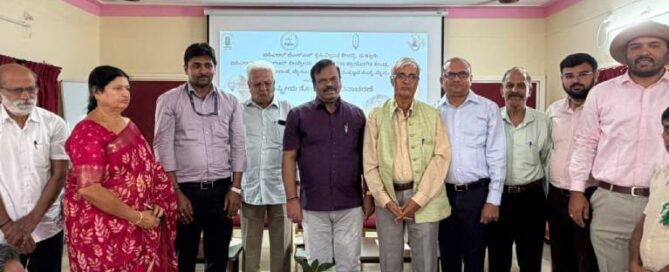
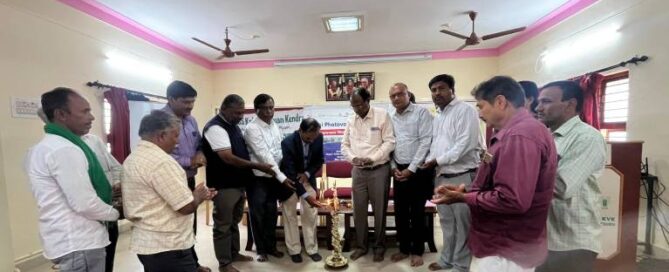
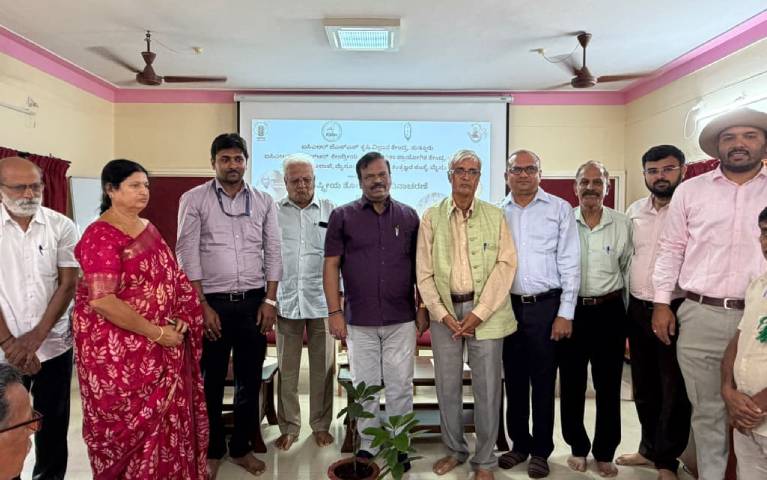
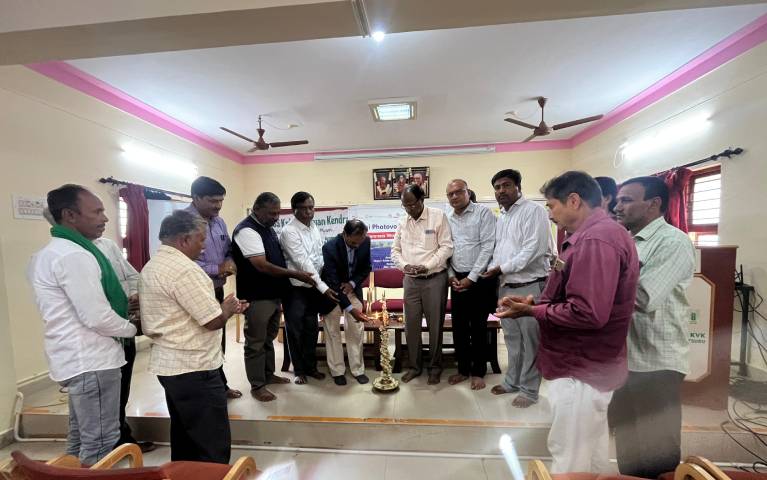
Suttur, August 7, 2026: National Horticulture Day and the Butterfruit Field Festival were organised on Friday, August 7, 2026, as part of the birth anniversary celebrations of the Father of Horticulture, Dr. M. H. Marigowda.

The programme was jointly organised by ICAR-JSS Krishi Vigyan Kendra, Suttur; ICAR-IIHR Central Horticultural Experimental Station, Chettahalli; Department of Horticulture, Mysuru; and the Institute of Agricultural Technologists (IAT), Mysuru.

Inaugurating the programme, retired Joint Director of Agriculture Dr. Vishakanta said that butterfruit has gained good market demand in recent years and has emerged as a horticultural crop with the potential to generate higher income for farmers. However, priority must be given to understanding market requirements, selecting suitable varieties, adopting scientific cultivation practices, and using quality seedlings. He said that good productivity and a stable income can be achieved only when the crop is cultivated under proper scientific guidance.

Chandru, Assistant Director of Horticulture, Nanjangud, provided information on various schemes and subsidies offered by the Horticulture Department, including support for nursery development, establishment of plantations, irrigation facilities, and other interventions. He urged farmers to make effective use of the schemes available through the department.

Shivashankarappa, Director of Horticulture, JSS Mahavidyapeetha, spoke about the life and achievements of Dr. M. H. Marigowda and recalled his immense contribution to the growth of the horticulture sector in Karnataka. Sharing his experiences of working with Dr. Marigowda, he said that several commercial horticultural crops gained popularity in the State as a result of his vision and efforts.

Presiding over the programme, Dr. Gyanesh B. N., Senior Scientist and Head, ICAR-JSS Krishi Vigyan Kendra, said that one of the key objectives of the Krishi Vigyan Kendra is to provide farmers with scientific information on new horticultural crops as part of National Horticulture Day. Butterfruit has the potential to emerge as a promising commercial crop in the future, he said.

He advised farmers to use quality planting material and adopt integrated crop management practices to achieve higher returns. He also urged them to make effective use of the technical guidance and training programmes conducted by the Krishi Vigyan Kendra.

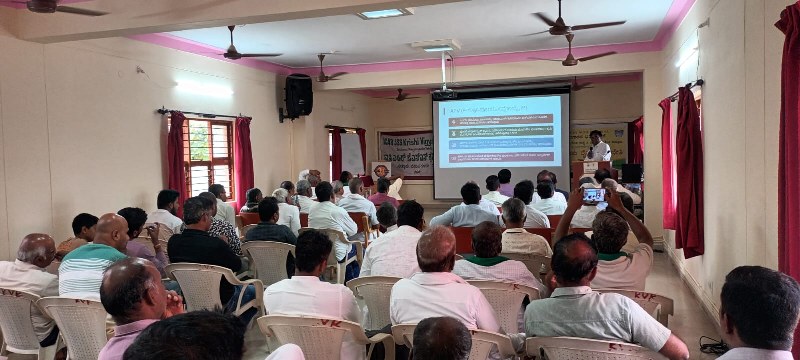
During the technical session, Dr. Muralidhar B.M., Scientist, ICAR-IIHR, Chettahalli, provided detailed information on the history of butterfruit, the contribution of the Father of Horticulture, Dr. M. H. Marigowda, and the background behind the popularisation of the crop in Karnataka.

He also explained various aspects of butterfruit cultivation, including varieties, value addition, nutritional importance, integrated nutrient management, irrigation systems, integrated pest and disease management, post-harvest management, and opportunities in domestic and export markets. He emphasised the importance of adopting scientific methods in butterfruit cultivation for better productivity and returns.

In the same technical session, Dr. Nayan Deepak provided practical information on butterfruit plant production, grafting techniques, quality nursery management, production of certified seedlings, and opportunities for farmers and young entrepreneurs to earn additional income through the nursery industry.

Dr. Ravindra, retired Vice-Chancellor Dr. Vishwanath, Dr. Vinay G. M., Dr. Prasad, Dr. Deepak, Dr. Rakshit, Mrs. Divya, Mr. Shamraj, staff members of the Krishi Vigyan Kendra, officials of the Horticulture Department, and members of the Institute of Agricultural Technologists participated in the programme.

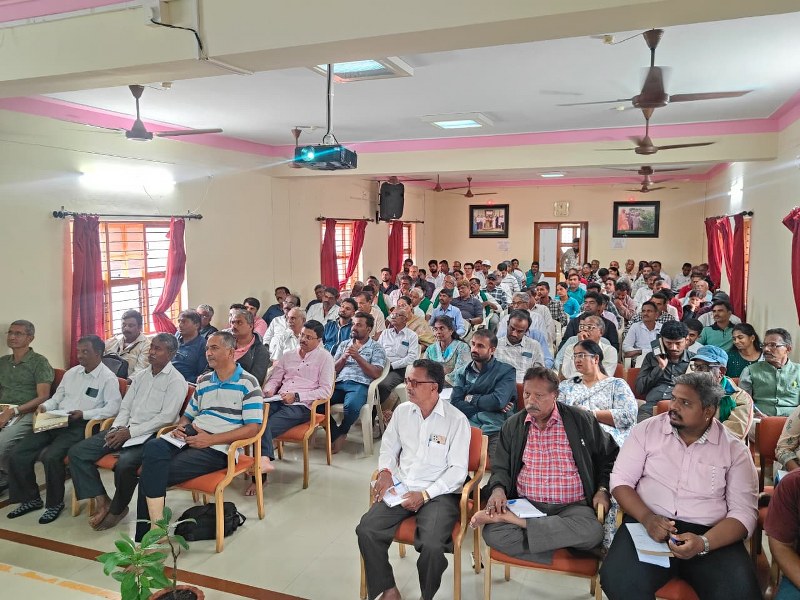
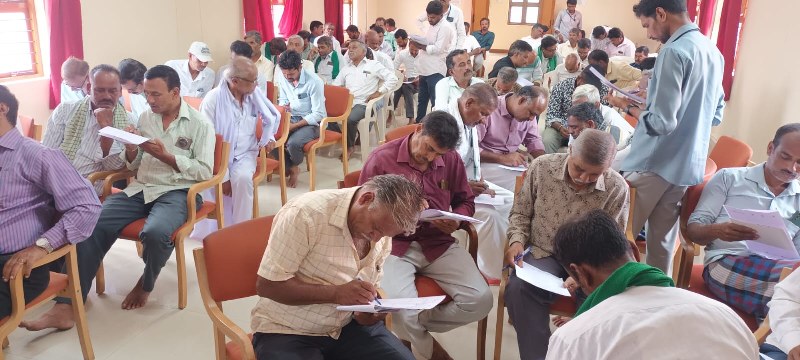
More than 120 farmers from various districts, including Mysuru, Mandya, Chamarajanagar, and Hassan, participated in the programme and benefited from the technical sessions and field-level information shared by the experts.

2026-08-10T05:43:12+00:00August 10th, 2026|

Bhajan Should Fill the Mind and Heart with Devotion and Peace: Prof. K. Ramamurthy Rao

Suttur, August 5, 2026: The fragrance of Bhajan should permeate the mind and heart, filling them with divine devotion, peace and positivity, said Prof. K. Ramamurthy Rao while delivering a lecture on the fourth day of the Bhajan Workshop organised by Jagadguru Sri Veerasimhasana Mahasamsthana Math, Sri Shivarathreeshwara Dharmika Datti, and JSS Mahavidyapeetha, at Suttur Srikshetra on August 5.

He said that Bhajan is an integral part of India’s culture and a simple means of reaching the Supreme Lord through pure devotion and receiving divine grace. Where there is Bhajan, there is no division, he observed.

Prof. Ramamurthy Rao said that Bhajan brings peace to the mind, removes negative thoughts, and nurtures love and trust in society. The spirit of divine devotion, peace and positivity should remain alive in every individual’s mind and heart, he added.

Highlighting the importance of rural Bhajan traditions, he described them as the lifeblood of the folk devotional heritage. Rural Bhajan, he said, is an ancient art form that brings villagers together and helps preserve and strengthen moral and cultural values.

He noted that the chanting of divine names and collective singing have held great significance since the time of the Dasa tradition and the Sharanas. Bhajan became a common platform where everyone in the village could come together, irrespective of caste or creed.

Prof. Ramamurthy Rao also explained the nine paths of devotion through which one may seek the grace of the Lord: Shravana, Kirtana, Smarana, Padasevana, Archana, Vandana, Dasya, Sakhya, and Atmanivedana.

He said that Shravana involves listening with devotion to stories of God, the Puranas, and the glories of the Lord. Kirtana refers to singing the Lord’s virtues, praises and names, while Smarana is the constant remembrance of His form and name in the mind.

Padasevana means serving the feet of the Lord with devotion, while Archana refers to ritual worship using flowers, sandalwood and other offerings. Vandana is bowing down in reverence and surrender, and Dasya is serving the Lord as a devoted servant.

He explained that Sakhya is to love the Lord and remain close to Him as one would with a dear friend, while Atmanivedana is the complete surrender of oneself. He added that our ancestors dedicated their body, mind and wealth in devotion through Bhajan in order to receive divine grace.

As part of the workshop, Srinivasa Poojary Yarlapadi of Udupi and his team conducted dance and Bhajan training for school students, while Uppunda Rajesh Padiyar provided training to the participating Bhajan teams.

Earlier in the morning, members of the Bhajan teams participated in yoga practice and meditation.

2026-08-10T05:38:31+00:00August 10th, 2026|

Inner Devotion is Greater Than Outward Rituals: Prof. M. Krishnagowda

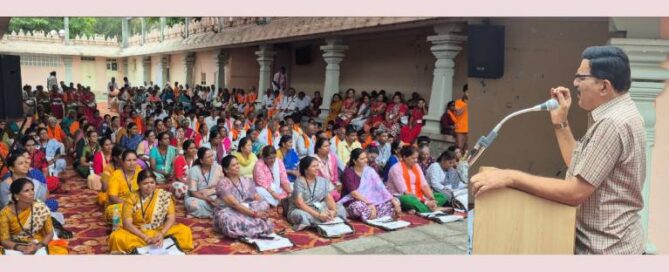
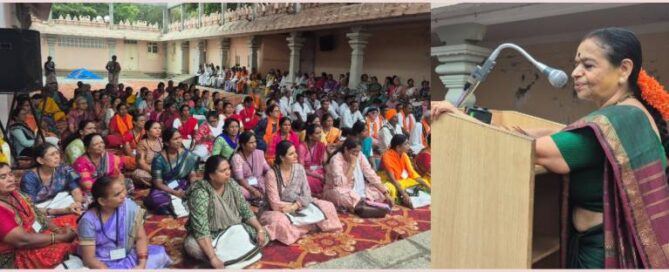
Prof. M. Krishnegowda delivers a lecture at the Bhajan Workshop organised by Jagadguru Sri Veerasimhasana Mahasamsthana Math, Sri Shivarathreeshwara Religious Endowment, and JSS Mahavidyapeetha at Suttur Srikshetra on August 4. Bhajan groups participating in the workshop are seen listening attentively to his lecture.

Suttur, August 4, 2026: The experience of pure love and devotion within the heart is greater than external rituals or the grandeur of words, said Prof. M. Krishnegowda while delivering a lecture on the third day of the Bhajana Workshop organised by Jagadguru Sri Veerasimhasana Mahasamsthana Math, Sri Shivaratreeshwara Religious Endowment, and JSS Mahavidyapeetha, at Suttur Srikshetra on August 4.

He said that dedication is essential in music, literature and spiritual pursuits. Bhajan places greater emphasis on touching the heart and purifying the inner self.

Highlighting the importance of the rural Bhajan tradition, Prof. Krishnegowda described it as the lifeblood of the folk and spiritual culture of villages. He said that Bhajan is a powerful force that unites rural communities and helps preserve religion and culture.

He observed that when people sit together and sing Bhajans, irrespective of caste or religion, it creates peace, harmony and unity. Through devotional songs, traditional values, devotion and moral teachings are passed on to future generations. Philosophical compositions also convey the essential truths of life and human values, he added.

Prof. Krishnegowda said that the Bhajan tradition, as an art of worship, possesses a rich literary heritage. The Bhakti tradition forms the foundation of Bhajan, and the leading exponents of Dasa literature also emerged from this spiritual heritage.

He noted that several senior poets who brought Bhajans into the folk tradition have enriched Karnataka’s devotional legacy. He mentioned Kadakola Madivalappa, Shishunala Sharif, and Kudalur Basavalinga Sharan among those who significantly nurtured the Bhajan tradition in the State.

As part of the workshop, Srinivasa Poojary Yarlapadi of Udupi and his team conducted dance-Bhajan training, while Uppunda Rajesh Padiyar provided Bhajan training to the participants.

Earlier in the morning, members of the participating Bhajan teams took part in yoga practice and meditation. They later watched an animated documentary on the Guru lineage of Sri Math at Suttur Darshan and learned about the illustrious history of the Math.

The participants also visited the original Math, Sri Someshwara Temple, Sri Mahadeshwara Ragibeesida Kallu, and Sri Veerabhadreshwara Temple, where they had darshan and received blessings.

They subsequently visited the Krishi Vigyan Kendra and witnessed a demonstration of various crops. At the goshala, they were provided information about indigenous breeds of cows.

2026-08-05T11:44:40+00:00August 5th, 2026|

Women Haridasas Made an Outstanding Contribution to Devotional Literature: Vidushi Sukanya Prabhakar

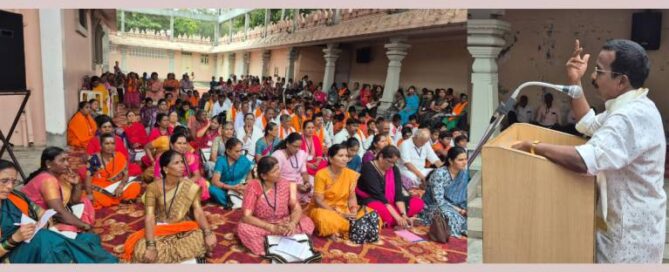
Suttur, August 3, 2026: Women Haridasas have made a commendable contribution to devotional literature, said Vidushi Sukanya Prabhakar while delivering a special lecture on the second day of the Bhajan Workshop organised by Jagadguru Sri Veerasimhasana Mahasamsthana Math, Sri Shivaratreeshwara Dharmika Datti, and JSS Mahavidyapeetha at Suttur Srikshetra on August 3.

She observed that, in the Karnataka Haridasa tradition, the contribution of women to devotional literature has been as significant as that of men. Through profound spiritual experiences in the world of devotion, they sought and realised the divine.

Referring to prominent women Haridasas, she said that Galagaliya Avva (Ramabai), Helavanakatte Girijamma, Harapanahalli Bhimavva, Nanjangud Thirumalamba, Bellary Radhabai, Kalasada Sundaramma, Ambabai, Gundamma, and Saraswatibai silently brought about a new social and spiritual awakening through their lives and compositions.

Vidushi Sukanya Prabhakar noted with concern that many women Haridasas were child widows. There were painful instances of adolescent girls being married to elderly men, and of young lives withering even before they could fully blossom. For many such women, service to Hari became a lifeline and a source of strength.

She said their devotion was deeply personal and emotional. They worshipped Hari as a father, conversed and argued with Him, sang and danced before Him, shared moments of humour, and, when confronted by the harshness of reality, laid their heads upon His shoulder and wept. Their devotion became both an expression of anguish and a means of finding solace.

The young women Haridasas, deeply affected by the oppressive and anti-life practices of society, questioned their fate and cried out, “Why was I not granted even a little renunciation, O God?” and “Who will save me from this unbearable world?”

She said that these women faced society in their own way, often without support from anyone. Although their lives were wounded by the harshness of social customs, they gave society a shower of flowers through their hymns and devotional compositions.

Describing their works as poetry of surrender, Vidushi Sukanya Prabhakar said that the life of each woman Haridasa was itself a poem. In their compositions, they became the heroines, while the only hero was the divine magician, Sri Krishna. Through their Bhajans, they proclaimed that Sri Krishna alone was their refuge.

Following the lecture, Srinivas Poojary Yarlapadi of Udupi and his team conducted dance and Bhajan training sessions. Uppunda Rajesh Padiyar also provided Bhajan training to the participants.

2026-08-05T10:32:09+00:00August 5th, 2026|

Bhajan Promotes Inner Realisation and Preserves India’s Spiritual Heritage: Jagadguru Sri Shivaratri Deshikendra Mahaswamy

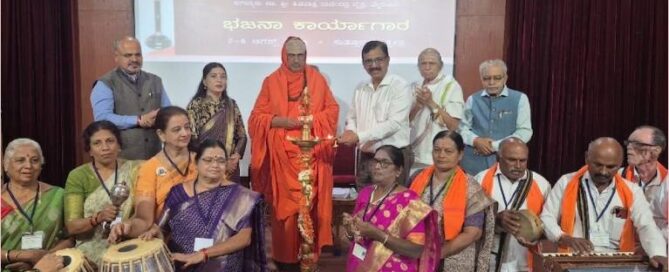
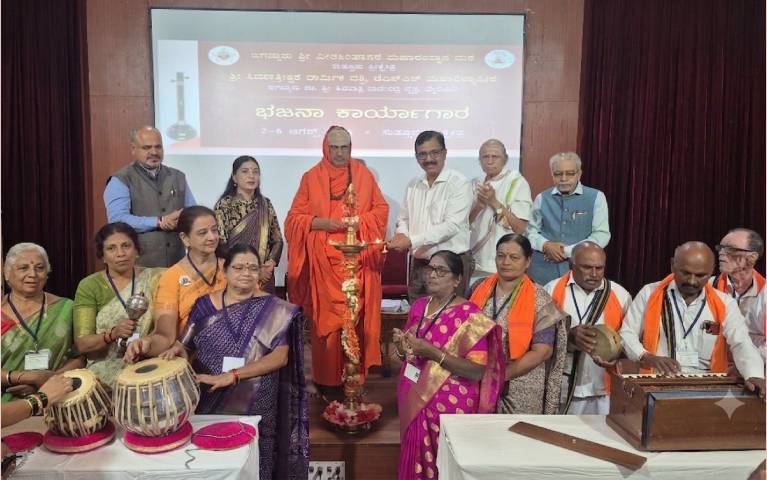
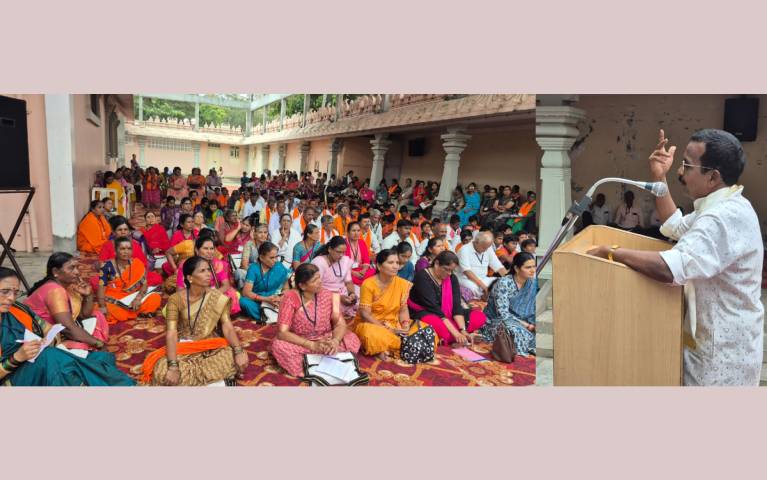
The Bhajana Workshop organised by Jagadguru Sri Veerasimhasana Mahasamsthana Math, Sri Shivaratreeshwara Religious Endowment and JSS Mahavidyapeetha at Suttur Srikshetra was inaugurated by Dr. N. B. Prakash, Vice-Chancellor, University of Agricultural Sciences, Dharwad, by lighting the ceremonial lamp in the divine presence of His Holiness Jagadguru Sri Shivaratri Deshikendra Mahaswamy on August 2. Dr. B. E. Rangaswamy, Smt. B. N. Veena, Prof. K. Anantharamu, Sri K. Raghuram Vajpayee, and the participants were present.

Suttur, August 2, 2026: Bhajan is an essential means of attaining inner realisation and serves as a divine force that elevates human beings from worldly life to spiritual transcendence, said His Holiness Jagadguru Sri Shivaratri Deshikendra Mahaswamiji while delivering his benedictory address at the Bhajan Workshop organised by the Jagadguru Sri Veerasimhasana Mahasansthana Math, Sri Shivaratreeshwara Religious Endowment, and JSS Mahavidyapeetha, at Suttur Srikshetra on August 2.

His Holiness said that Bhajan is a sacred art form handed down through generations. It has flourished through the spiritual traditions of Adi Shankaracharya, Ramanujacharya, Basavanna and the Dasa tradition. A harmonious blend of Carnatic and Hindustani music, Bhajan fosters mental peace, happiness and spiritual fulfilment, he added.

Inaugurating the workshop, Dr. N. B. Prakash, Vice-Chancellor of the University of Agricultural Sciences, Dharwad, said that Bhajan promotes unity and a spirit of cooperation among rural communities. It helps keep worldly thoughts away from the mind, instils a sense of divinity and serves as a vibrant folk art that preserves the country’s traditional culture.

Dr. B. E. Rangaswamy, Vice-Chancellor of the University of Agricultural Sciences, Davanagere, distributed Bhajan equipment to the participants. He said that before the advent of mass media, dramas, Veeragase, Kolata and Bhajans performed in temples served as the primary sources of entertainment in rural areas. Bhajan, he observed, nurtures a secular outlook that transcends caste, creed and religion.

Addressing the gathering, Shri K. Raghuram Vajpayee, State Vice-President of the Akhil Karnataka Brahmin Mahasabha, said that Bhajan enables devotees to express a unique form of devotion to the Almighty, attain Brahmananda and experience lasting happiness. He remarked that nature itself is filled with music and rhythm, reflected in plants, trees, creepers, the blowing wind, birds and animals. Preserving this rich musical heritage, he said, is the collective responsibility of society.

Mrs. B. N. Veena, Additional Commissioner of Mysuru City Corporation, described Bhajan as a unique medium for expressing devotion. She said it plays a vital role in bringing harmony between the body and mind. She also noted that the Bhajan tradition has been instrumental in taking the compositions of Dasaru and Vadiraja, pioneers of Karnataka’s musical heritage, to the wider society.

Speaking on the occasion, Dr. K. Anantharam, retired Professor, said that Bhajan promotes peace of mind, devotion to God and unity in society. It contributes to spiritual upliftment and mental well-being and is a noble form of service to the Almighty. Saints and devotees followed this path to attain the grace of God, he said. He also appreciated the efforts of Suttur Srikshetra in preserving the nation’s cultural heritage through music, drama, Bhajan, meditation and several other cultural and spiritual programmes.

The programme also featured Bhajan demonstrations and Bhajan dance training sessions.

The programme commenced with an invocation by Mrs. Bhagyalakshmi and Mrs. K. Jayashree. Prof. D. S. Sadashivamurthy welcomed the gathering, Mr. R. S. Kumar proposed the vote of thanks, and Mrs. S. Savitha compered the programme.
2026-08-05T05:53:41+00:00August 5th, 2026|

Five-Day Bhajan Workshop Begins at Suttur Srikshetra

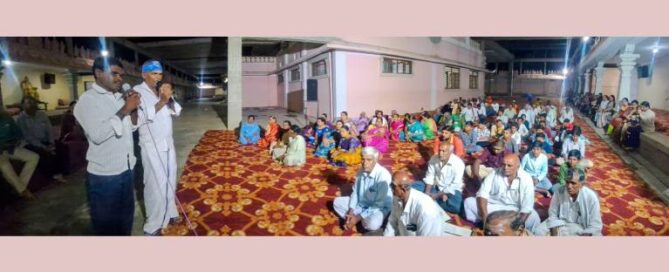
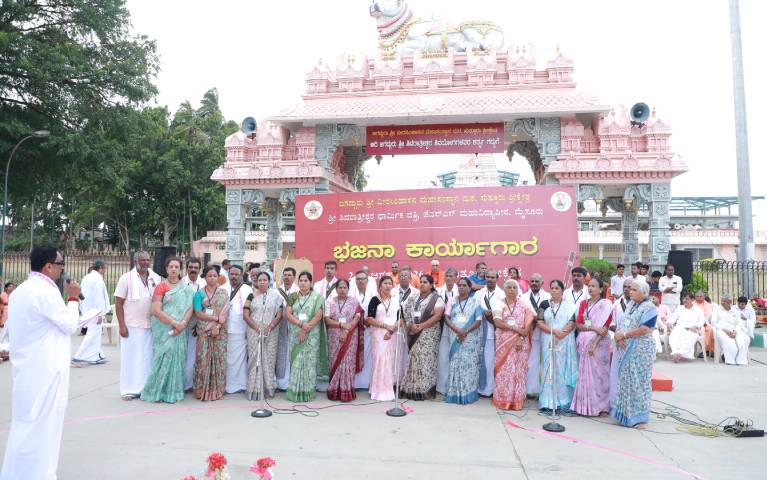
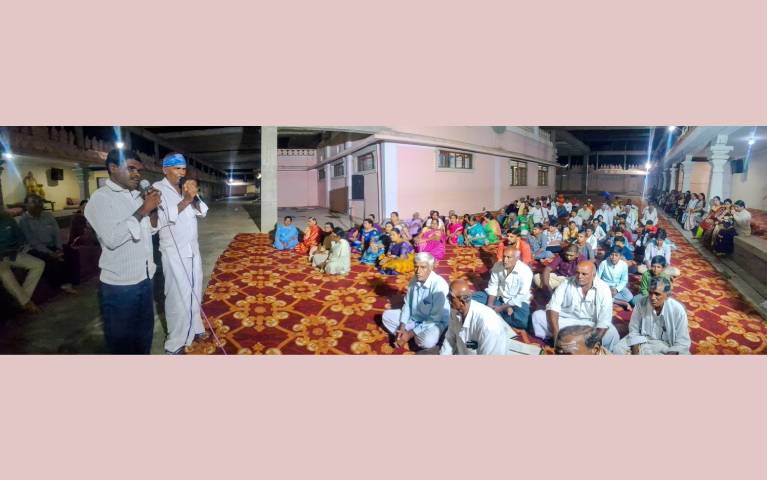
The Bhajan workshop jointly organized by the Jagdguru Sri Veerasimhasana Mahasamsthana Math, in association with the Sri Shivarathreeshwara Dharmika Datti and JSS Mahavidyapeet, held at Suttur Srikshetra commenced on August 01, 2026 evening. The participants of the workshop who are seen in the picture are introducing themselves.

Suttur, August 1, 2026: A five-day Bhajan Workshop commenced at Suttur Srikshetra on August 1, 2026, under the joint auspices of Jagadguru Sri Veerasimhasana Mahasamsthana Math, Sri Shivaratreeshwara Religious Endowment, and JSS Mahavidyapeetha.

The workshop began with the blessings of His Holiness Jagadguru Sri Shivaratri Deshikendra Mahaswamiji.

During the inaugural evening session, the campers introduced themselves and rendered a selection of bhajans, marking the beginning of the devotional and cultural activities planned as part of the workshop.

More than 220 campers from Mysuru, Hassan, Kodagu, Mandya, Tumakuru, Dharwad, Raichur, Chitradurga, Belagavi, Bagalkot, Vijayapura, Bidar, Bengaluru, and Bengaluru Rural districts are participating in the workshop.

The workshop will continue for five days at Suttur Srikshetra.

2026-08-05T05:06:24+00:00August 5th, 2026|

Workshop Highlights the Role of Solar Power in Building Self-Reliant and Sustainable Agriculture

Suttur, July 30, 2026: A workshop on the “Use of Solar Power in Agriculture” was organised on July 29, 2026, at the ICAR–JSS Krishi Vigyan Kendra, Suttur, under the joint auspices of the Agriculture Skill Council of India, Bengaluru South Region, and the National Skill Foundation of India (OSEI).

Inaugurating the workshop, Dr. M.J. Chandregowda, Principal Scientist, ICAR–Agricultural Technology Application Research Institute, Bengaluru, said that the Central and State Governments had introduced several schemes for the welfare of farmers. He urged farmers to make effective use of these schemes and utilise available agricultural resources efficiently to increase their income.

Dr. Chandregowda advised farmers to improve crop productivity and prepare a detailed expenditure plan before undertaking cultivation. Instead of depending on a single crop, they should plan to cultivate a variety of crops. He also encouraged them to ensure a continuous source of income by taking up allied activities such as dairy farming, poultry farming and sericulture.

Speaking as the chief guest, Shri M. Purushottam Gowda, Regional Head, Bengaluru South, Agriculture Skill Council of India, said that training programmes on the use of solar power in agriculture were being organised for farmers across the State. He explained that farmers could generate the electricity required for their agricultural operations by installing solar power systems on their farms. They could also install additional solar power units on barren land and earn income by selling the electricity generated.

Presiding over the programme, Dr. B.N. Gyanesh, Senior Scientist and Head, ICAR–JSS Krishi Vigyan Kendra, said that the workshop had been organised to help farmers become self-reliant in meeting their electricity requirements. He urged farmers to make full use of the knowledge and guidance provided during the workshop.

Referring to the rainfall deficit recorded this year, Dr. Gyanesh advised farmers to plan for suitable alternative crops. He recommended cultivating pulses such as black gram and cowpea, along with green-manure crops such as dhaincha and sunhemp, which help improve soil fertility. He also encouraged farmers to take up dairy farming, fish farming in agricultural ponds and poultry farming as alternative sources of income.

Shri Mahadevaswamy rendered the invocation. Dr. Y.P. Prasad welcomed the gathering, while Dr. Deepak also extended a welcome. Shri Shamraj compered the programme.
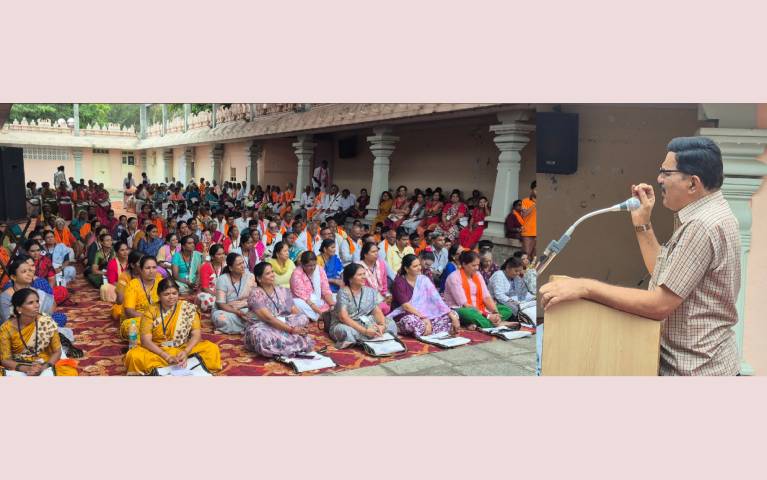
More than 80 farmers, along with the staff members of the Krishi Vigyan Kendra, participated in the workshop.

2026-08-05T02:39:01+00:00August 5th, 2026|

Guru’s Guidance Is Essential for a Meaningful Life: Shri S.M. Siddarajappa

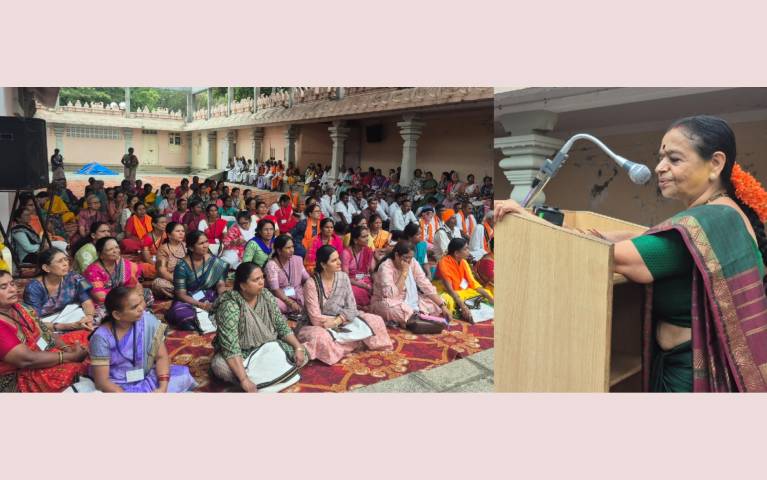
Suttur, July 29, 2026: Emphasizing the significance of a Guru in shaping an individual’s life, Shri S.M. Siddarajappa, Retired Headmaster of Nanjangud, said that a Guru’s guidance is indispensable in making life meaningful. He was delivering a special lecture at the Guru Purnima celebration organized at the premises of JSS Educational Institutions, Suttur.

Addressing the gathering, Shri Siddarajappa said that Guru Purnima is the most significant full moon day among the twelve full moons of the year. He explained that Purnima symbolizes perfection and that the occasion is dedicated to expressing gratitude to one’s Guru. Describing the Vedas as the fountainhead of knowledge, he said that Guru Purnima is also an occasion to remember Maharshi Veda Vyasa, revered as the Adi Guru.

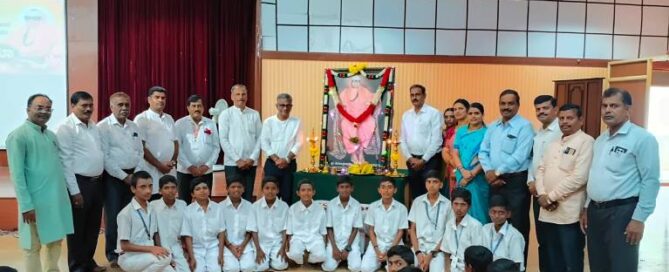
Paying rich tributes to Paramapujya Jagadguru Dr. Shri Shivaratri Rajendra Mahaswamiji, the three-time pontiff of Suttur Srimath, he said that the revered seer transformed the lives of lakhs of students by establishing hundreds of schools, colleges, and hostels, and by providing them with education, food, and shelter. Remembering and expressing gratitude to such great Gurus, he added, is a noble privilege for all.

Speaking on the occasion, Shri G.L. Tripurantaka, Assistant Administrator of JSS Institutions, said that Indian culture accords the highest respect to the Guru. He observed that Gurus identify the hidden potential within students, nurture their talents, and inspire them to achieve excellence. Gurus, he said, remain an integral part of every individual’s life and should be remembered with gratitude every day. Referring to the rapid advancement of technology, he remarked that while Artificial Intelligence (AI) may replace many professions, it can never replace the role of a Guru.

As part of the programme, graduation certificates were distributed to students of the Sanskrit College, Suttur.

Among those present were the heads of various JSS institutions, Shri Veerabhadraiah, Shri M. Rajashekaramurthy, Shri M. Gu. Basavanna, Shri G.M. Shadakshari, Shri G. Shivaswamy, Vidwan Dr. K.B. Mallikarjuna, and Shri S. Chandramouleshwara, among others.

The programme commenced with a prayer by school students. Ms. H.B. Sahana welcomed the gathering, Ms. Nithya proposed the vote of thanks, and Ms. Deepika compered the programme.
2026-08-04T07:00:08+00:00August 4th, 2026|