admin

|admin

About admin

This author has not yet filled in any details.
So far admin has created 1612 blog entries.

Bhajan Promotes Inner Realisation and Preserves India’s Spiritual Heritage: Jagadguru Sri Shivaratri Deshikendra Mahaswamy

The Bhajana Workshop organised by Jagadguru Sri Veerasimhasana Mahasamsthana Math, Sri Shivaratreeshwara Religious Endowment and JSS Mahavidyapeetha at Suttur Srikshetra was inaugurated by Dr. N. B. Prakash, Vice-Chancellor, University of Agricultural Sciences, Dharwad, by lighting the ceremonial lamp in the divine presence of His Holiness Jagadguru Sri Shivaratri Deshikendra Mahaswamy on August 2. Dr. B. E. Rangaswamy, Smt. B. N. Veena, Prof. K. Anantharamu, Sri K. Raghuram Vajpayee, and the participants were present.

Suttur, August 2, 2026: Bhajan is an essential means of attaining inner realisation and serves as a divine force that elevates human beings from worldly life to spiritual transcendence, said His Holiness Jagadguru Sri Shivaratri Deshikendra Mahaswamiji while delivering his benedictory address at the Bhajan Workshop organised by the Jagadguru Sri Veerasimhasana Mahasansthana Math, Sri Shivaratreeshwara Religious Endowment, and JSS Mahavidyapeetha, at Suttur Srikshetra on August 2.

His Holiness said that Bhajan is a sacred art form handed down through generations. It has flourished through the spiritual traditions of Adi Shankaracharya, Ramanujacharya, Basavanna and the Dasa tradition. A harmonious blend of Carnatic and Hindustani music, Bhajan fosters mental peace, happiness and spiritual fulfilment, he added.

Inaugurating the workshop, Dr. N. B. Prakash, Vice-Chancellor of the University of Agricultural Sciences, Dharwad, said that Bhajan promotes unity and a spirit of cooperation among rural communities. It helps keep worldly thoughts away from the mind, instils a sense of divinity and serves as a vibrant folk art that preserves the country’s traditional culture.

Dr. B. E. Rangaswamy, Vice-Chancellor of the University of Agricultural Sciences, Davanagere, distributed Bhajan equipment to the participants. He said that before the advent of mass media, dramas, Veeragase, Kolata and Bhajans performed in temples served as the primary sources of entertainment in rural areas. Bhajan, he observed, nurtures a secular outlook that transcends caste, creed and religion.

Addressing the gathering, Shri K. Raghuram Vajpayee, State Vice-President of the Akhil Karnataka Brahmin Mahasabha, said that Bhajan enables devotees to express a unique form of devotion to the Almighty, attain Brahmananda and experience lasting happiness. He remarked that nature itself is filled with music and rhythm, reflected in plants, trees, creepers, the blowing wind, birds and animals. Preserving this rich musical heritage, he said, is the collective responsibility of society.

Mrs. B. N. Veena, Additional Commissioner of Mysuru City Corporation, described Bhajan as a unique medium for expressing devotion. She said it plays a vital role in bringing harmony between the body and mind. She also noted that the Bhajan tradition has been instrumental in taking the compositions of Dasaru and Vadiraja, pioneers of Karnataka’s musical heritage, to the wider society.

Speaking on the occasion, Dr. K. Anantharam, retired Professor, said that Bhajan promotes peace of mind, devotion to God and unity in society. It contributes to spiritual upliftment and mental well-being and is a noble form of service to the Almighty. Saints and devotees followed this path to attain the grace of God, he said. He also appreciated the efforts of Suttur Srikshetra in preserving the nation’s cultural heritage through music, drama, Bhajan, meditation and several other cultural and spiritual programmes.

The programme also featured Bhajan demonstrations and Bhajan dance training sessions.

The programme commenced with an invocation by Mrs. Bhagyalakshmi and Mrs. K. Jayashree. Prof. D. S. Sadashivamurthy welcomed the gathering, Mr. R. S. Kumar proposed the vote of thanks, and Mrs. S. Savitha compered the programme.

2026-08-05T05:53:41+00:00August 5th, 2026|

Five-Day Bhajan Workshop Begins at Suttur Srikshetra

The Bhajan workshop jointly organized by the Jagdguru Sri Veerasimhasana Mahasamsthana Math, in association with the Sri Shivarathreeshwara Dharmika Datti and JSS Mahavidyapeet, held at Suttur Srikshetra commenced on August 01, 2026 evening. The participants of the workshop who are seen in the picture are introducing themselves.

Suttur, August 1, 2026: A five-day Bhajan Workshop commenced at Suttur Srikshetra on August 1, 2026, under the joint auspices of Jagadguru Sri Veerasimhasana Mahasamsthana Math, Sri Shivaratreeshwara Religious Endowment, and JSS Mahavidyapeetha.

The workshop began with the blessings of His Holiness Jagadguru Sri Shivaratri Deshikendra Mahaswamiji.

During the inaugural evening session, the campers introduced themselves and rendered a selection of bhajans, marking the beginning of the devotional and cultural activities planned as part of the workshop.

More than 220 campers from Mysuru, Hassan, Kodagu, Mandya, Tumakuru, Dharwad, Raichur, Chitradurga, Belagavi, Bagalkot, Vijayapura, Bidar, Bengaluru, and Bengaluru Rural districts are participating in the workshop.

The workshop will continue for five days at Suttur Srikshetra.

2026-08-05T05:06:24+00:00August 5th, 2026|

Workshop Highlights the Role of Solar Power in Building Self-Reliant and Sustainable Agriculture

Suttur, July 30, 2026: A workshop on the “Use of Solar Power in Agriculture” was organised on July 29, 2026, at the ICAR–JSS Krishi Vigyan Kendra, Suttur, under the joint auspices of the Agriculture Skill Council of India, Bengaluru South Region, and the National Skill Foundation of India (OSEI).

Inaugurating the workshop, Dr. M.J. Chandregowda, Principal Scientist, ICAR–Agricultural Technology Application Research Institute, Bengaluru, said that the Central and State Governments had introduced several schemes for the welfare of farmers. He urged farmers to make effective use of these schemes and utilise available agricultural resources efficiently to increase their income.

Dr. Chandregowda advised farmers to improve crop productivity and prepare a detailed expenditure plan before undertaking cultivation. Instead of depending on a single crop, they should plan to cultivate a variety of crops. He also encouraged them to ensure a continuous source of income by taking up allied activities such as dairy farming, poultry farming and sericulture.

Speaking as the chief guest, Shri M. Purushottam Gowda, Regional Head, Bengaluru South, Agriculture Skill Council of India, said that training programmes on the use of solar power in agriculture were being organised for farmers across the State. He explained that farmers could generate the electricity required for their agricultural operations by installing solar power systems on their farms. They could also install additional solar power units on barren land and earn income by selling the electricity generated.

Presiding over the programme, Dr. B.N. Gyanesh, Senior Scientist and Head, ICAR–JSS Krishi Vigyan Kendra, said that the workshop had been organised to help farmers become self-reliant in meeting their electricity requirements. He urged farmers to make full use of the knowledge and guidance provided during the workshop.

Referring to the rainfall deficit recorded this year, Dr. Gyanesh advised farmers to plan for suitable alternative crops. He recommended cultivating pulses such as black gram and cowpea, along with green-manure crops such as dhaincha and sunhemp, which help improve soil fertility. He also encouraged farmers to take up dairy farming, fish farming in agricultural ponds and poultry farming as alternative sources of income.

Shri Mahadevaswamy rendered the invocation. Dr. Y.P. Prasad welcomed the gathering, while Dr. Deepak also extended a welcome. Shri Shamraj compered the programme.

More than 80 farmers, along with the staff members of the Krishi Vigyan Kendra, participated in the workshop.

2026-08-05T02:39:01+00:00August 5th, 2026|

Guru’s Guidance Is Essential for a Meaningful Life: Shri S.M. Siddarajappa

Suttur, July 29, 2026: Emphasizing the significance of a Guru in shaping an individual’s life, Shri S.M. Siddarajappa, Retired Headmaster of Nanjangud, said that a Guru’s guidance is indispensable in making life meaningful. He was delivering a special lecture at the Guru Purnima celebration organized at the premises of JSS Educational Institutions, Suttur.

Addressing the gathering, Shri Siddarajappa said that Guru Purnima is the most significant full moon day among the twelve full moons of the year. He explained that Purnima symbolizes perfection and that the occasion is dedicated to expressing gratitude to one’s Guru. Describing the Vedas as the fountainhead of knowledge, he said that Guru Purnima is also an occasion to remember Maharshi Veda Vyasa, revered as the Adi Guru.

Paying rich tributes to Paramapujya Jagadguru Dr. Shri Shivaratri Rajendra Mahaswamiji, the three-time pontiff of Suttur Srimath, he said that the revered seer transformed the lives of lakhs of students by establishing hundreds of schools, colleges, and hostels, and by providing them with education, food, and shelter. Remembering and expressing gratitude to such great Gurus, he added, is a noble privilege for all.

Speaking on the occasion, Shri G.L. Tripurantaka, Assistant Administrator of JSS Institutions, said that Indian culture accords the highest respect to the Guru. He observed that Gurus identify the hidden potential within students, nurture their talents, and inspire them to achieve excellence. Gurus, he said, remain an integral part of every individual’s life and should be remembered with gratitude every day. Referring to the rapid advancement of technology, he remarked that while Artificial Intelligence (AI) may replace many professions, it can never replace the role of a Guru.

As part of the programme, graduation certificates were distributed to students of the Sanskrit College, Suttur.

Among those present were the heads of various JSS institutions, Shri Veerabhadraiah, Shri M. Rajashekaramurthy, Shri M. Gu. Basavanna, Shri G.M. Shadakshari, Shri G. Shivaswamy, Vidwan Dr. K.B. Mallikarjuna, and Shri S. Chandramouleshwara, among others.

The programme commenced with a prayer by school students. Ms. H.B. Sahana welcomed the gathering, Ms. Nithya proposed the vote of thanks, and Ms. Deepika compered the programme.

2026-08-04T07:00:08+00:00August 4th, 2026|

Farmers Advised to Adopt Alternative Cropping Systems and Rainwater-Conservation Practices Amid Rainfall Deficit

Suttur, July 29, 2026: Mysuru district generally receives adequate rainfall during June and July. However, the prevailing rainfall deficit has created drought-like conditions in several areas. Under these circumstances, farmers have been advised to adopt suitable alternative cropping systems, crop-management practices, soil and water conservation measures, and protective irrigation methods.

Farmers who have already sown crops such as cowpea, millets, peas, cotton and groundnut in rainfed areas should provide protective irrigation through sprinkler systems wherever water is available. They are also advised to maintain an optimum plant population by thinning excess cowpea plants, spraying suitable nutrients, and applying water-soluble fertilizers to support crop growth during moisture stress.

In canal-irrigated areas, farmers may plough and prepare their land in advance. Once rainfall is received, short-duration crops such as sorghum, black gram, lentil, buckwheat, millets and other cereal crops may be cultivated.

As crop production in dryland areas is entirely dependent on rainfall, greater priority should be given to fodder crops. Farmers should also pay special attention to ensuring adequate drinking water for livestock. Crops such as millets, buckwheat and fodder sorghum should be sown immediately after receiving sufficient rainfall.

Treating seeds with a 2 per cent calcium chloride solution before sowing can help improve the drought tolerance of crops.

Sowing operations should be carried out across the slope using a suitable hoe or seed drill to reduce water runoff and conserve soil moisture. In black clay soils, square basins or pits may be created to retain rainwater for a longer period. This will help conserve sufficient moisture for the subsequent sowing of crops such as sorghum, buckwheat and green gram during the winter season.

In red sandy soils, suitable pits or trenches should be created to conserve rainwater. Such measures can help improve groundwater levels and support the recharge of borewells.

Farmers have also been advised to collect, conserve and store rainwater received in the coming days. The harvested water may subsequently be used to provide protective irrigation to crops during dry spells.

2026-08-04T06:43:26+00:00August 4th, 2026|

Farmers Advised to Adopt Alternative Cropping Systems and Rainwater-Conservation Practices Amid Rainfall Deficit

Suttur, July 29, 2026: Mysuru district generally receives adequate rainfall during June and July. However, the prevailing rainfall deficit has created drought-like conditions in several areas. Under these circumstances, farmers have been advised to adopt suitable alternative cropping systems, crop-management practices, soil and water conservation measures, and protective irrigation methods.

Farmers who have already sown crops such as cowpea, millets, peas, cotton and groundnut in rainfed areas should provide protective irrigation through sprinkler systems wherever water is available. They are also advised to maintain an optimum plant population by thinning excess cowpea plants, spraying suitable nutrients, and applying water-soluble fertilizers to support crop growth during moisture stress.

In canal-irrigated areas, farmers may plough and prepare their land in advance. Once rainfall is received, short-duration crops such as sorghum, black gram, lentil, buckwheat, millets and other cereal crops may be cultivated.

As crop production in dryland areas is entirely dependent on rainfall, greater priority should be given to fodder crops. Farmers should also pay special attention to ensuring adequate drinking water for livestock. Crops such as millets, buckwheat and fodder sorghum should be sown immediately after receiving sufficient rainfall.

Treating seeds with a 2 per cent calcium chloride solution before sowing can help improve the drought tolerance of crops.

Sowing operations should be carried out across the slope using a suitable hoe or seed drill to reduce water runoff and conserve soil moisture. In black clay soils, square basins or pits may be created to retain rainwater for a longer period. This will help conserve sufficient moisture for the subsequent sowing of crops such as sorghum, buckwheat and green gram during the winter season.

In red sandy soils, suitable pits or trenches should be created to conserve rainwater. Such measures can help improve groundwater levels and support the recharge of borewells.

Farmers have also been advised to collect, conserve and store rainwater received in the coming days. The harvested water may subsequently be used to provide protective irrigation to crops during dry spells.

2026-07-29T11:29:19+00:00July 29th, 2026|

Suttur JSS School Students Shine at State-Level Yoga Competition

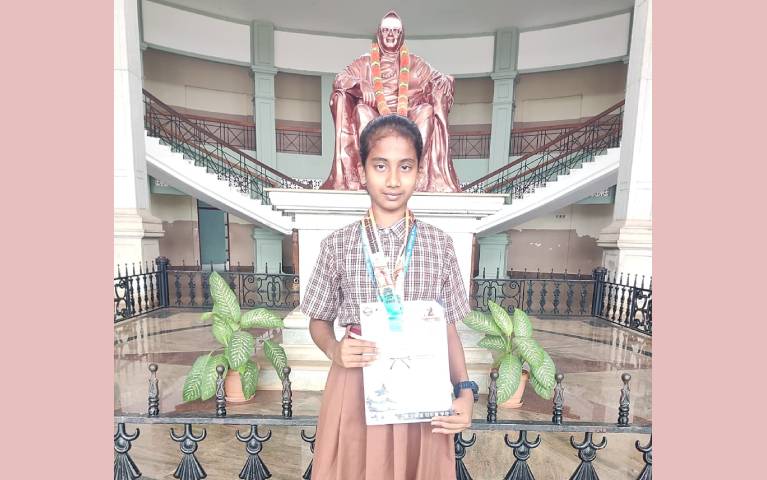
Students of Suttur JSS School won individual and team honours at the State-level Open Yoga Competition organised by G.K. Vinyasa Yoga Kendra and Sri Krishna Yogas, Mysuru. Also seen in the picture are the yoga masters, the school Principal, and the yoga asana instructors who guided the students.

2026-07-24T05:43:11+00:00July 24th, 2026|

Akhila Bharata Sharana Sahitya Parishath Making a Distinctive Contribution to Society: Sri Jayarajendra Swami

Students and dignitaries are seen during the inauguration of the Akhila Bharata Sharana Sahitya Parishath Youth Unit, organised jointly by the Akhila Bharata Sharana Sahitya Parishath, Mysuru City Unit, and Suttur JSS Residential School. The programme was inaugurated by Dr. D. S. Guru, Senior Professor, Department of Studies in Computer Science, University of Mysore, in the gracious presence of Sri Jayarajendra Swami, the youngest seer of Suttur Srimath. Also seen are Dr. Vishwanath, Retired Professor, Department of Kannada Studies, Jawaharlal Nehru University, New Delhi; Dr. Jayappa Honnali, President, Akhila Bharata Sharana Sahitya Parishath, Mysuru City Unit; Smt. Shobharani Jayaprakash, President, Kadali Mahila Vedike, Mysuru; Shri M. A. Chidananda; Dr. Shailaja Nagaraj; and Smt. Rashmi Shadakshari.

Suttur, July 22, 2026: The Akhila Bharata Sharana Sahitya Parishath is making a distinctive contribution to contemporary society, said Sri Jayarajendra Swami, the youngest seer of Suttur Math.

He was speaking at the inauguration of the Youth Unit of the Akhila Bharata Sharana Sahitya Parishath, organised jointly by its Mysuru City Unit and Suttur JSS Residential School.

The seer said that adopting the values expressed in the Vachanas in one’s daily life helps purify the mind, and a pure mind contributes to the development of a strong personality. He emphasised the importance of listening, contemplation and self-discipline. Observing that speech is one of the greatest gifts bestowed upon human beings by God, he said that good speech helps build friendships.

Inaugurating the programme, Dr. D. S. Guru, Senior Professor, Department of Studies in Computer Science, University of Mysore, said that His Holiness Paramapujya Jagadguru Sri Shivarathri Rajendra Mahaswamiji established the Sharana Sahitya Parishath with the objective of imparting life values to children along with formal education.

He said that the Youth Unit was an important part of this vision and that its primary goal should be to introduce children to the objectives and ideals of the Vachanas and thereby contribute to building a healthy society. The Vachanas of the Shivasharanas are especially relevant to young people, and they should read, understand and adopt their teachings to make their lives meaningful, he added.

Dr. Vishwanath, retired Professor of Kannada Studies, Jawaharlal Nehru University, New Delhi, said that language plays a vital role in the lives of young people. He observed that Vachana literature occupies a foundational place in the development of language and culture. Simple language, he said, is one that can be understood by everyone.

He stated that the Vachana writers laid the foundation for a humane cultural tradition and promoted the values of Kayaka and Dasoha. He explained that Vachana signifies meaningful speech and conveys the values of communication, friendship, respect, love and harmonious coexistence.

Dr. Jayappa Honnali, President of the Mysuru City Unit of the Akhila Bharata Sharana Sahitya Parishath, said that although society may at times fail to live up to the ideals of the Vachana writers, the Vachanas themselves will always remain relevant.

He said that the Vachana writers proclaimed that consciousness is the Supreme Being, work is Kailasa and knowledge is the Guru. He urged people to adopt the culture of work and devotion advocated by the Sharanas and build better and more meaningful lives.

Students who had won prizes in the self-composed Vachana competition recited their compositions during the programme. Cash prizes were presented to the winners, while certificates of appreciation were distributed to all the participating students.

Dr. Rudramuni Swami of Almatti and Shri S. P. Udayashankar, Administrator of JSS Institutions, were present on the occasion. Assistant Coordinator Shri Veerabhadraiah, donors Brigadier Shivananda M. A. and Shri M. A. Chidananda, Dr. Shailaja Nagaraj, office-bearers of the Youth Wing, heads of JSS institutions, teachers and students also attended the programme.

The programme began with an invocation by the schoolchildren. Smt. Rashmi Shadakshari welcomed the gathering, Dr. Shailaja Nagaraj delivered the introductory remarks, Smt. Sunitha Guru proposed the vote of thanks, and Shri G. R. Srivatsa compered the programme.

2026-07-23T06:27:52+00:00July 23rd, 2026|