-
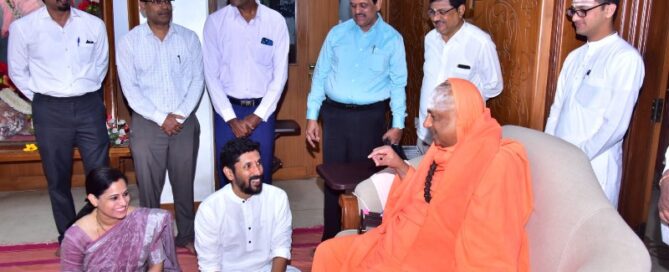
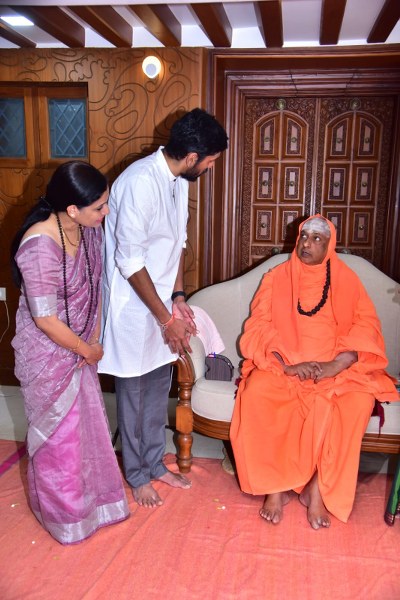
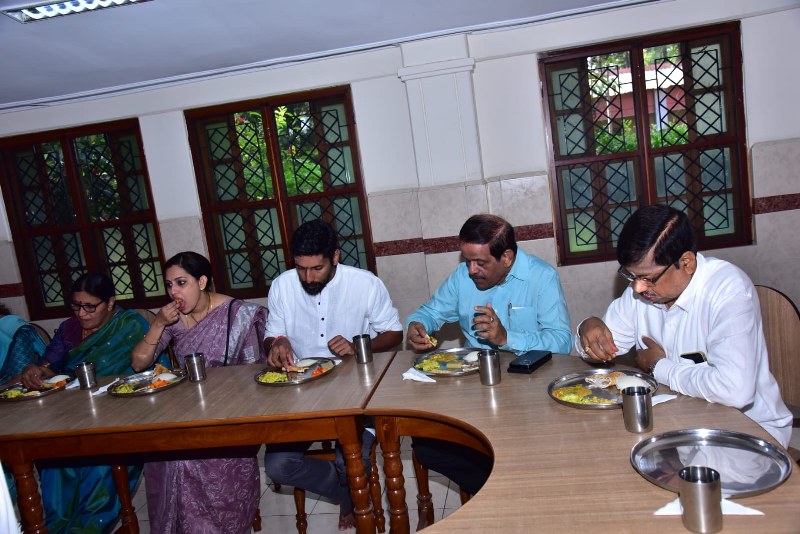
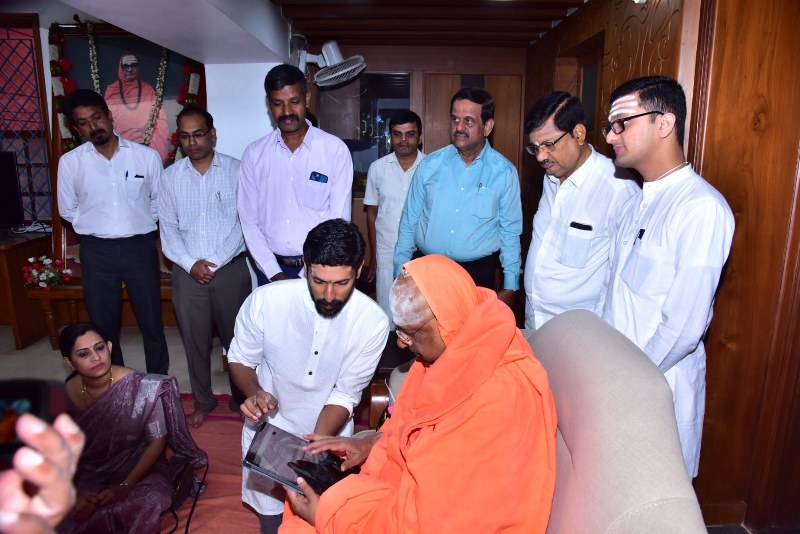
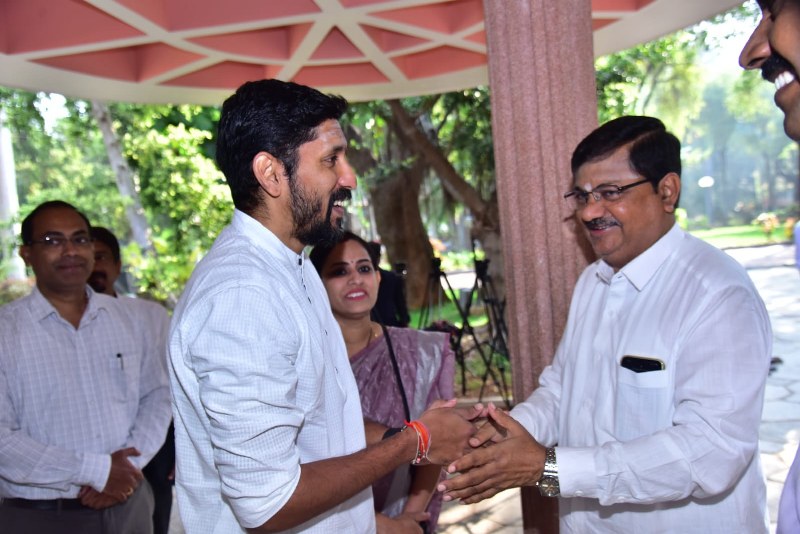
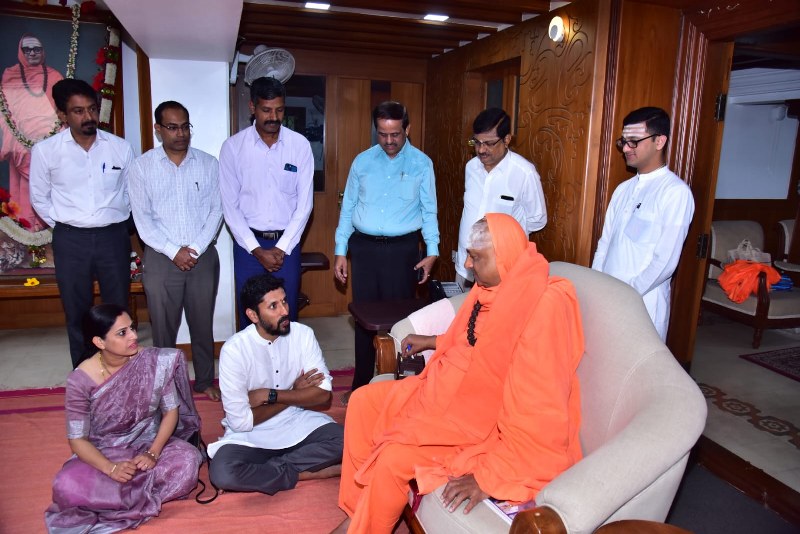
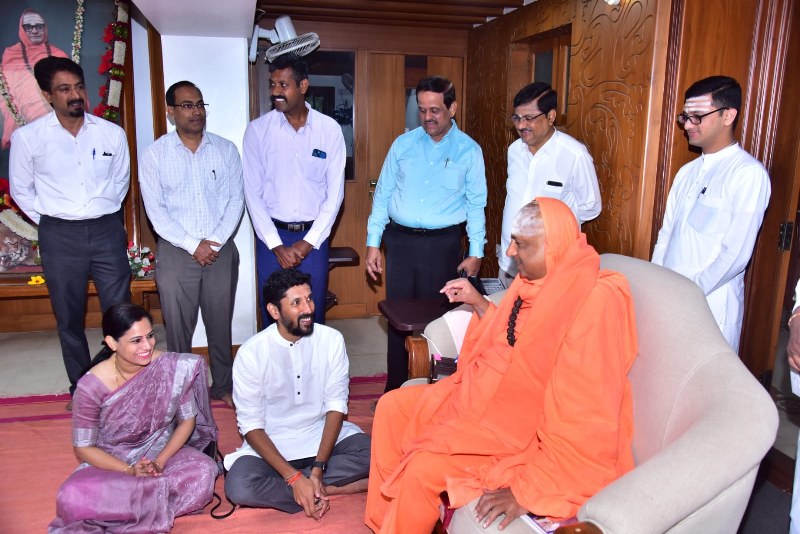
Sri B.Y. Vijayendra, First-time MLA from Shikaripura, and his wife receive blessings from His Holiness Sri Shivarathri Deshikendra Mahaswamiji during their visit to Sri Suttur Math. GallerySri B.Y. Vijayendra, First-time MLA from Shikaripura, and his wife receive blessings from His Holiness Sri Shivarathri Deshikendra Mahaswamiji during their visit to Sri Suttur Math.
“Prof. A.H.M. Vijayalakshmi and HH Jagadguru Sri Shivarathri Deshikendra Mahaswamiji Lead Tree-Planting Initiative on World Environment Day”
Prof. A.H.M. Vijayalakshmi, Regional Joint Director, Collegiate Education Department, Mysuru, join His Holiness Jagadguru Sri Shivarathri Deshikendra Mahaswamiji in planting a sapling at Sri Suttur Kshetra, commemorating World Environment Day. Also present in the picture are Prof. A.M. Nagabhushan from M.S. Ramaiah Institute of Technology and other esteemed individuals.
World Environment Day: A Global Call for Environmental Protection and Sustainability
Author: Kum. Shilpa, Technical Assistant and Smt. H.V. Divya, Senior Scientist and Head (Incharge)
June 5th, marks the annual observance of World Environment Day—a vital campaign initiated by the United Nations to raise awareness and inspire action towards safeguarding the environment. Since its inception in 1974, this global platform has focused on addressing critical environmental issues such as marine pollution, overpopulation, global warming, sustainable development, and wildlife crime. With participation from over 143 countries each year, World Environment Day serves as a catalyst for public outreach and encourages collaboration among businesses, non-governmental organizations, communities, governments, and celebrities to champion environmental causes.
Rooted in History: World Environment Day was established in 1972 during the Stockholm Conference on the Human Environment, a gathering that sought to integrate human interactions and environmental preservation. The following year, in 1973, the first World Environment Day took place under the theme “Only One Earth.” Since then, the campaign has expanded its activities through the selection of various host nations.
India’s Commitment: India, being the 5th largest plastic producer globally, has taken significant steps to combat plastic pollution. In his 2019 Independence Day speech, Prime Minister Narendra Modi called upon the nation to discontinue the use of single-use plastics. Subsequently, on July 1, 2022, the Government of India banned the production and usage of less essential and disposable plastic items. This measure aims to mitigate the harmful effects of plastic on the environment, as single-use plastics pose a grave threat to ecological balance.
Launch of the Plastic-free India Campaign: On the auspicious day of Mahatma Gandhi’s birthday, October 2, 2019, Prime Minister Narendra Modi inaugurated the Plastic-free India Campaign. The campaign’s objectives encompass the prohibition of plastic, increased tree and sapling planting, water conservation, plastic recycling, and the preservation of wildlife, flora, and fauna. It emphasizes the importance of individual commitment to environmental protection and encourages activities such as tree planting, public area cleanups, and community programs to inspire collective action.
The Urgent Need for Change: Research reveals that approximately 9 billion tons of plastic are produced each year, with only 9% being recycled. The majority of plastic waste ends up in landfills or the environment, persisting for centuries. If this trend continues, it is estimated that by 2050, there will be a staggering 12 billion tons of plastic waste in landfills and the environment. Plastic, which takes hundreds of years to decompose, disintegrates into microplastics that pose significant hazards to ecosystems. Common plastic products, including bottles, bags, food packaging, and straws, contribute to environmental degradation, block waterways, endanger aquatic life, and release toxic pollutants when burned.
Our Collective Responsibility: The power to address these challenges lies in our hands. The first step towards sustainable change is the prohibition of single-use plastics. Implementing an effective waste management system, including the proper segregation of wet and dry waste, is equally crucial. Solid waste management units have been established in all districts, efficiently segregating plastic waste for recycling and material recovery.
The Perils of Plastic Bags: Plastic bags pose severe threats, including:
- Endangering Animals: Stray animals often consume food wrapped in plastic, leading to choking and various diseases.
- Toxic Chemicals: Plastic bags contain chemicals such as BPA, which can cause ulcers, obesity, cancer, and heart diseases.
- Groundwater Contamination: Harmful chemicals from plastic bags contaminate drinking water sources.
Embracing Alternatives: To reduce the impact of plastic, the use of reusable and biodegradable paper bags has gained traction. These eco-friendly alternatives offer a safer option for wildlife and mitigate environmental harm during shopping trips.
Alternative for plastic usage in our daily lives
| Plastic Product | Alternative | Plastic Product | Alternative |
| Plastic bottles | Steel/ Metal bottles | Plastic bags | Paper/ Clothe bags |
| Plastic chairs | Wooden/ Metal chairs | Plastic Pen | Pens made using wood |
| Plastic tyres | Wooden vehicle tyres | Plastic Dining Table | Wooden table |
| Plastic Mixie | Grinding stone | Plastic TV covers | Covers made of cloth |
| Plastic bucket | Steel bucket | Plastic Zip | Hooks |
| Plastic tumbler | Steel/ Earthen pot | Plastic Geometry | Cloth pouch |
| Plastic bags | Bags made using wood/ Bamboo | Plastic pads | Cotton cloth |
| Plastic soop | Wooden soop | Plastic thread for cloth drying | Metal wire |
| Plastic container | Steel box | Plastic rope | Rope made of coir |
| Plastic pipe | Metal pipe | Plastic mat | Coir mats |
| Plastic mat | Bamboo mat | Plastic Torana | Cloth Torana/ Torana made of paddy husk |
| Plastic broom | Bamboo straw broom | Plastic tray | Wooden tray |
| Plastic toys | Wooden/ clay toys | Plastic slipper stand | Wooden slipper stand |
| Plastic spoons | Steel/ brass spoon | Plastic swing | Swings made of cloth |
| Plastic pots | Steel/ Metal pot | Plastic tissue paper | Bamboo tissue paper |
| Plastic mobile cover | Cloth cover | Plastic flower garlands | Paper flower garlands |
| Plastic cooker rubber | Earthen lid | Plastic bangle | Glass bangle |
| Plastic toothbrush | Neem stick/ Wooden toothbrush | Plastic stove | Metal stove |
| Plastic comb | Wooden comb | Plastic vanity bag | Cloth bag |
| Plastic water drum | Concrete/ cement container | Plastic ribbon | Cloth ribbon |
| Plastic plates | Steel/ Metal/ Plantain leaf plates | Plastic examination pad | Wooden pad |
| Plastic Tea glasses | Paper/ earthen glass | Plastic banner | Cloth banner |
| Plastic clock | Steel clock | Plastic necklaces | Metal necklaces |
Reducing plastic usage is crucial for environmental sustainability. Here are some effective methods to achieve this goal:
- Carry reusable bags: Bring your own cloth or jute bags when shopping to avoid using plastic bags provided by stores.
- Say no to single-use plastics: Refuse plastic straws, cutlery, and disposable water bottles. Instead, opt for alternatives like stainless steel straws, bamboo cutlery, and reusable water bottles.
- Use eco-friendly packaging: Choose products with minimal or plastic-free packaging. Look for alternatives like glass, cardboard, or biodegradable materials.
- Bring your own containers: When buying food or takeaway meals, bring your own containers to avoid using plastic packaging. Many stores and restaurants are open to accommodating this request.
- Choose loose produce: Buy fruits and vegetables that are not pre-packaged in plastic. Opt for loose produce and use mesh or fabric bags to carry them.
- Support local markets: Visit local farmers’ markets or bulk stores that offer unpackaged products. These establishments often encourage sustainable practices and provide options to reduce plastic waste.
- Choose sustainable alternatives: Look for products made from eco-friendly materials such as bamboo, glass, or stainless steel. Replace plastic items like toothbrushes, razors, and food storage containers with sustainable alternatives.
- Recycle and dispose responsibly: Follow proper waste management practices and ensure that recyclable materials are appropriately sorted and recycled. Dispose of plastic waste responsibly to prevent it from ending up in landfills or waterways.
- Educate and spread awareness: Raise awareness about the environmental impact of plastic usage among your friends, family, and community. Encourage others to adopt sustainable practices and reduce plastic consumption.
- Advocate for policy changes: Support initiatives and campaigns that aim to reduce plastic usage. Urge government authorities to implement and enforce regulations against single-use plastics.
By implementing these measures in our daily lives and promoting conscious consumerism, we can contribute to reducing plastic usage and protecting the environment for future generations.
The IQAC of JSS College of Arts, Commerce and Science, Ooty road, Mysuru-25 organized Two Day Faculty Training Programme on Outcome Based Education (OBE)
“Honesty, Hard Work and Consistency of the teachers will bring quality change in education”
– Prof. N.K. Lokanath
The IQAC of JSS College of Arts, Commerce and Science, Ooty road, Mysuru-25 organized Two Day Faculty Training Programme on Outcome Based Education (OBE) in the Golden Jubilee Hall on 02 and 03 June 2023. The programme was inaugurated by Prof. N.K. Lokanath, Vice Chancellor, University of Mysore. In the inaugural speech, Prof. Lokanath felt that a change is required at this juncture in the education field. There is a huge transformation in the students expectations these days and hence outcome based knowledge is essential to make students get employed. Jobs created this year are changed next year and hence continuous monitoring and implementing new initiatives are required to bring a quality change in higher education institutions (HEIs). He also highlighted the salient features of NEP-2020 which is mainly concentrating on the vertical depth of one subject. Further, he added that skills related programmes should be part of the curriculum. The present day teachers should have clarity and flexibility in order to prepare the students to face real world challenges.
In his conceptual note, Prof. B.V. Sambashivaiah, Chief Executive of the College brought to the notice of the teachers about the objectives and significance of OBE. He stated that there is diversity in education institutions and a common platform has to be brought in. To bring uniformity in HEIs, CBCS, NEP, etc. have come into being. Continuing, he said that the gap between institutes and industries have to bridged in order to make the students employable. Dr. Mendus Jacob, CEO, IPSR Solutions Ltd., Kerala who gave Keynote address expressed that the quality of both teachers as well as students have to be improved and ICT & AI tools are very much required for implementing OBE effectively.
Prof. R. Mugeshappa, Director, College Education Division, JSS Mahavidyapeetha, in his Presidential Speech opined that various parameters of OBE will lead to improvement of skills and quality in teaching-learning. He emphasized how traditional education has been transformed to modern day teaching through “technology included teaching”. The two-day Training Programme will be highly beneficial to teachers of the General Education Colleges coming under JSS MVP. The two-day event will feature different Technical Talks by resource persons from IPSR Solutions Ltd. Kerala.
Prof. M.P. Vijayendra Kumar, Principal welcomed the guests and others. Ms. Tejaswini and team rendered invocation. Dr N. Rajendraprasad, IQAC Coordinator compeered and proposed vote of thanks.
Teachers Workshop on Science and Maths Conducted in Suttur by JSS Mahavidyapeetha
Additional Coordinating Officer Sri Sampath inaugurating the two-day Workshop for JSS High Schools Science and Mathematics Teachers, at Suttur Sriskehtra. Sri S.C. Channabasappa, Sri N. Renukaswamy, Sri B.A. Rajashekar, Sri G.L. Tripurantaka and resource persons are seen in the picture.
Suttur, May 30, 2023: A two-day reorientation workshop for High School Science and Maths Teachers, organized by the JSS Mahavidyapeetha, commenced in Suttur on Tuesday. The workshop aimed to enhance the teaching skills and knowledge of educators in these critical subjects.
The program was presided over by Sri B.A. Rajashekara, Director of the School Physical Education Division, JSS MVP. In his opening remarks, he emphasized the importance of teachers having a deep understanding of their subjects. He highlighted the significant role of Science and Mathematics in shaping the world and urged teachers to adopt effective teaching methods that would foster student learning and engagement.
Sri G.L. Tripurantaka, Coordinating Officer, JSS Institutions, Suttur, graced the occasion as the chief guest. He emphasized the need for teachers to continuously update their knowledge and maintain the sanctity of their profession. Recognizing the competitive nature of the modern world, he emphasized the importance of ongoing training to develop expertise in their respective fields.
The workshop witnessed the presence of Sri Sampath, Additional Coordinating Officer, JSS Institutions, Suttur, and esteemed subject resource persons including Smt. Sharada, Sri Vaidyanathan, Sri Lingaraju, Sri Basavaraju, Sri Girish, Sri Nelvin, and others.
The program began with an invocation by the students of the school. Sri S.C. Channabasappa, Subject Inspector, extended a warm welcome to the participants. Sri N. Renukaswamy, Assistant Education Officer, delivered the vote of thanks, expressing gratitude to all involved. Smt. K.S. Mamatha, Co-Teacher, skillfully compered the event.
The workshop aims to equip teachers with updated pedagogical approaches, ensuring an enriching learning experience for students in the fields of Science and Mathematics.
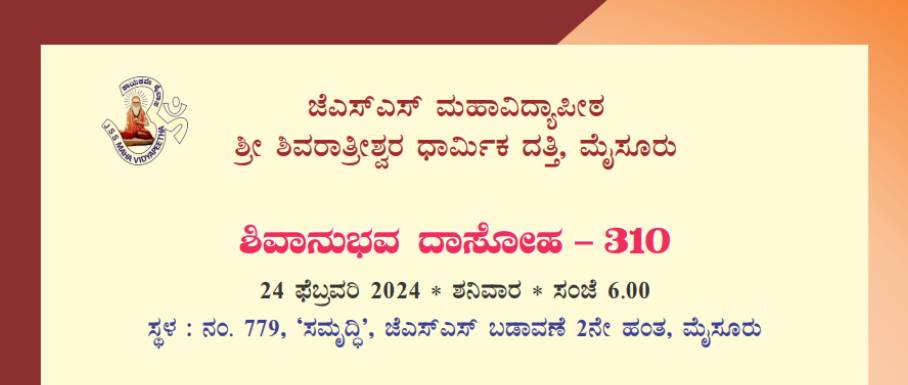
Outcome Based Education (OBE)
Program: Outcome Based Education (OBE)
Date: June 2, 2023
Time: 10.00 am
Venue: JSS College of Arts, Commerce & Science, Ooty Road, Mysuru
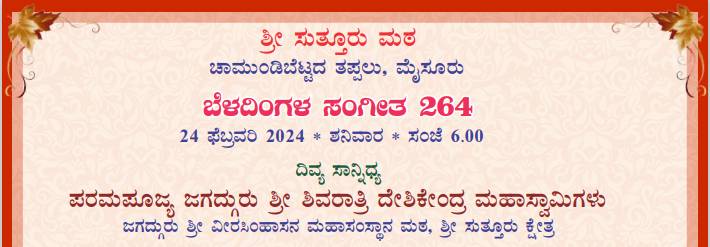
Moonlight Music – 255
Program: Moonlight Music – 255
Date: June 4, 2023, Sunday
Time: 6.00 pm
Venue: Foothills of Chamundi, Mysuru
Apiculture Training Program Empowers Farmers in Suttur
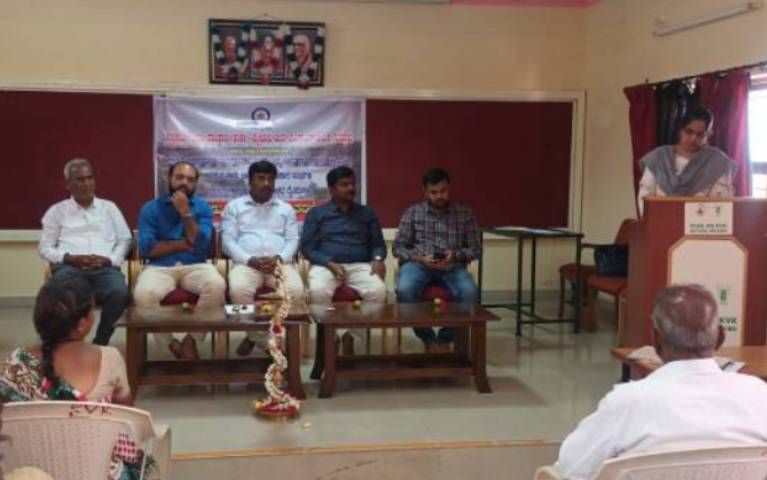
Suttur, May 27, 2023: The ICAR JSS Krishi Vignan Kendra, Suttur, in collaboration with the Nanjundeshwara Farmers’ Producers’ Company Limited, Nanjangud, successfully organized a one-day Apiculture Training Program on May 27, 2023, at the JSS KVK in Suttur.
The program, presided over by Smt. Divya H.V., Senior Scientist and Head (Incharge), shed light on the various initiatives and functions of the JSS KVK, emphasizing the benefits of practicing apiculture. She shared inspiring examples of farmers who have transformed into successful entrepreneurs through apiculture, providing guidance to participants on how to undertake apiculture as a lucrative venture. She assured farmers of the ICAR JSS Krishi Vignan Kendra’s unwavering support in their apiculture endeavors.
The training program featured resource persons Sri Jayashankar and Raju, who delved into the history of apiculture, highlighted the advantages of honey, emphasized the significance of honey bees, discussed apiculture farming techniques, and outlined precautionary measures for beekeeping. A live demonstration further enhanced participants’ understanding of the subject.
During his address, Dr. Y.P. Prasad emphasized the vital role of pollination in increasing agricultural yields. He encouraged interested farmers to consider apiculture farming as a commercial activity, which promises additional profits alongside their existing agricultural practices.
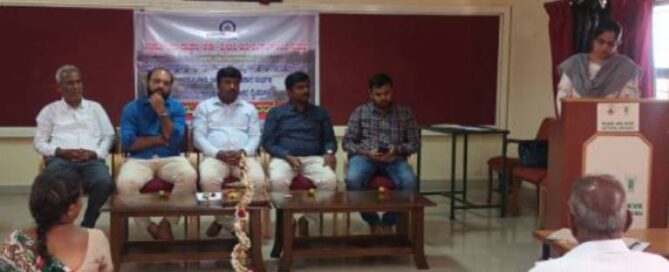
Approximately 50 farmers enthusiastically participated in the program, availing themselves of the valuable knowledge and skills imparted during the workshop. For those interested in pursuing apiculture farming, professional apiculturists, such as Jayashankar (9980617477), were made available to provide further guidance.
The success of the training program owes much to the participation of Dr. Vinay G. M., Dr. Rakshithraj, Dr. Shamraj, Gangappa Hipparagi, Shilpa, and others who lent their expertise and support to ensure its effectiveness.

Apiculture Training Program Empowers Farmers in Suttur
HH Sri Shivarathri Deshikendra Mahaswamiji Emphasizes the Importance of Spreading Sharanas Ideals
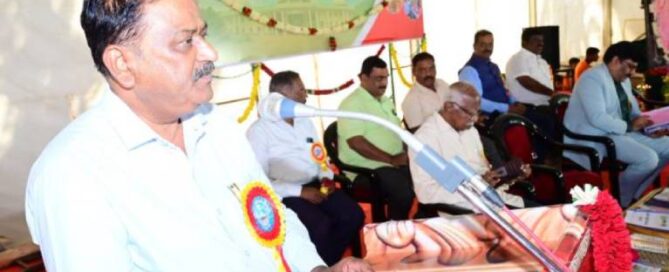
His Holiness Jagadguru Sri Shivarathri Deshikendra Mahaswamiji giving his blessings to the participants of the Ahila Bharatha Sharana Sahitya Parishath Office-Bearers two-day workshop, held on May 28, Sunday, at the Suttur Srikshetra. Sri Apparao Akkone, Chairman, Ahikla Bharata Sharana Sahitya Parishath and office-bearers are seen in the picture.
Suttur, May 27, 2023: His Holiness Sri Shivarathri Deshikendra Mahaswamiji delivered a thought-provoking address during the valedictory session of the workshop held at Suttur Srikshetra on May 27 and 28. The workshop was organized by the Akhila Bharatha Sharana Sahitya Parishath, focusing on the development of office-bearers.
In his speech, Sri Shivarathri Deshikendra Mahaswamiji expressed his belief that the ideals of Sharanas should permeate every household. He commended the efforts of the Akhila Bharatha Sharana Sahitya Parishath in spreading the essence of vachanas (verses) by establishing branches across districts and taluk headquarters. The Mahaswamiji emphasized the need to adapt activities to guide and mentor the youth according to present-day requirements. He stressed the importance of diligence, honesty, and commitment in all endeavors, cautioning against errors and highlighting the significance of organizing programs with sensitivity to avoid any inappropriate content.
“These workshops provide a platform for the exchange of ideas and experiences. By organizing such workshops, we fulfill the desires of His Holiness Sri Shivarathri Rajendra Mahaswamiji, as envisioned by the Dharmika Datti. It is essential for individuals to embrace the notion of lifelong learning, acknowledging that true knowledge lies in recognizing the vastness of the unknown,” added Sri Shivarathri Deshikendra Mahaswamiji.
Sri Apparao Akkone, Chairman of the Akhila Bharata Sharana Sahitya Parishath, urged all office-bearers to remain active and engaged at all times. He lauded the continuous efforts of the Suttur Srimath in organizing such workshops and expressed his satisfaction with the successful completion of the program.
Distinguished speakers at the workshop included Prof. C. Naganna, Sri Manjunath Kanchyani, Prof. Morabada Mallikarjuna, Ma. Gu. Sadanandaiah, Smt. Susheela Somashekar, Sri Apparao Akkone, Dr. C. Somashekar, Smt. Usha Hiremath, and Raveesh Kyatanabeedu, who shared their valuable insights and perspectives.
The event witnessed a warm welcome by Sri Nagarajamurthy, President of the Bengaluru Urban District Chapter. Smt. Premakka Angadi, from Belagavi Kadali Mahila Vedike, delivered the vote of thanks. The program commenced with an invocation by Katyayini Kolar, while Srishyla Pattanashetty, Secretary of the Akhila Bharatha Sharana Sahitya Parishath, skillfully compered the event.
With the participation of over 120 office-bearers and members from various districts, the two-day workshop proved to be an enriching experience.
Language Teachers Workshop at JSS School in Suttur
Sri Sampath, Additional Coordinating Officer, JSS Institutions, Suttur, inaugurated the two-day JSS High Schools Kannada and English Teachers workshop, held at Suttur Srikshetra. Smt. Moly Varghese, Smt. Asha, Sri N. Renukaswamy, Sri B.A. Rajashekara, Sri G.L.Tripurantaka, Sri H.V.Mahadevaprasad, Sri Ravish Kumar and Sri S.C. Channabassappa are seen in the picture.
Suttur, May 24, 2023: The JSS Mahavidyapeetha, in collaboration with the Suttur Srikshetra, recently conducted a two-day Kannada and English language teachers revival workshop.
The event, held under the esteemed patronage of Sri B.A. Rajashekara, Director of School Education Division, JSS Mahavidyapeetha, aimed to enhance the teaching skills of language educators. Sri Rajashekara emphasized the importance of creating a conducive learning environment by freeing the minds of students. He highlighted the need for teachers to remain open to learning themselves, recognizing that no one has all the answers. “Each student faces unique challenges, and it is our responsibility to set aside our own problems and facilitate their learning. A teacher’s satisfaction lies in professionalism,” he stated.
The workshop’s chief guest, Sri G.L. Tripurantaka, Coordinating Officer of JSS Institutions, Suttur, expressed concern over the lack of discipline and concentration among students. He stressed the importance of cautious language experimentation to avoid misunderstandings. Sri Tripurantaka advised teachers to impart knowledge carefully, emphasizing that academic success requires continuous practice and a proper learning environment.
Distinguished guests in attendance included Sri Sampath, Additional Coordinating Officer of JSS Institutions, Suttur, Sri Ravish Kumar, Language Resource Person, Sri H.V. Mahadevaprasad, Smt. Moli Varghese, Smt. S. Asha, and others.
The program commenced with an invocation by the school’s students. Sri S.C. Channabasappa, Subject Inspector, extended a warm welcome to the guests and attendees. Sri N. Renukaswamy, Assistant Education Officer, delivered the vote of thanks, while Sri Andaiah Shirurumath, Co-Teacher, skillfully compered the event.