
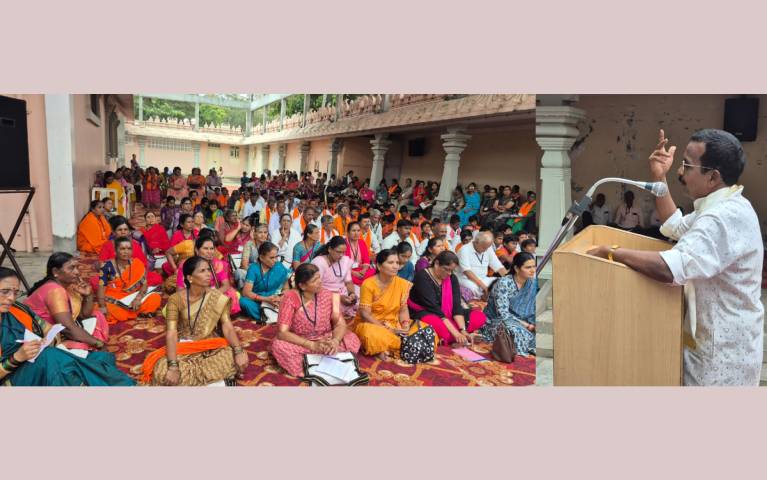
Suttur, August 5, 2026: The fragrance of Bhajan should permeate the mind and heart, filling them with divine devotion, peace and positivity, said Prof. K. Ramamurthy Rao while delivering a lecture on the fourth day of the Bhajan Workshop organised by Jagadguru Sri Veerasimhasana Mahasamsthana Math, Sri Shivarathreeshwara Dharmika Datti, and JSS Mahavidyapeetha, at Suttur Srikshetra on August 5.
He said that Bhajan is an integral part of India’s culture and a simple means of reaching the Supreme Lord through pure devotion and receiving divine grace. Where there is Bhajan, there is no division, he observed.
Prof. Ramamurthy Rao said that Bhajan brings peace to the mind, removes negative thoughts, and nurtures love and trust in society. The spirit of divine devotion, peace and positivity should remain alive in every individual’s mind and heart, he added.
Highlighting the importance of rural Bhajan traditions, he described them as the lifeblood of the folk devotional heritage. Rural Bhajan, he said, is an ancient art form that brings villagers together and helps preserve and strengthen moral and cultural values.
He noted that the chanting of divine names and collective singing have held great significance since the time of the Dasa tradition and the Sharanas. Bhajan became a common platform where everyone in the village could come together, irrespective of caste or creed.
Prof. Ramamurthy Rao also explained the nine paths of devotion through which one may seek the grace of the Lord: Shravana, Kirtana, Smarana, Padasevana, Archana, Vandana, Dasya, Sakhya, and Atmanivedana.
He said that Shravana involves listening with devotion to stories of God, the Puranas, and the glories of the Lord. Kirtana refers to singing the Lord’s virtues, praises and names, while Smarana is the constant remembrance of His form and name in the mind.
Padasevana means serving the feet of the Lord with devotion, while Archana refers to ritual worship using flowers, sandalwood and other offerings. Vandana is bowing down in reverence and surrender, and Dasya is serving the Lord as a devoted servant.
He explained that Sakhya is to love the Lord and remain close to Him as one would with a dear friend, while Atmanivedana is the complete surrender of oneself. He added that our ancestors dedicated their body, mind and wealth in devotion through Bhajan in order to receive divine grace.
As part of the workshop, Srinivasa Poojary Yarlapadi of Udupi and his team conducted dance and Bhajan training for school students, while Uppunda Rajesh Padiyar provided training to the participating Bhajan teams.
Earlier in the morning, members of the Bhajan teams participated in yoga practice and meditation.