
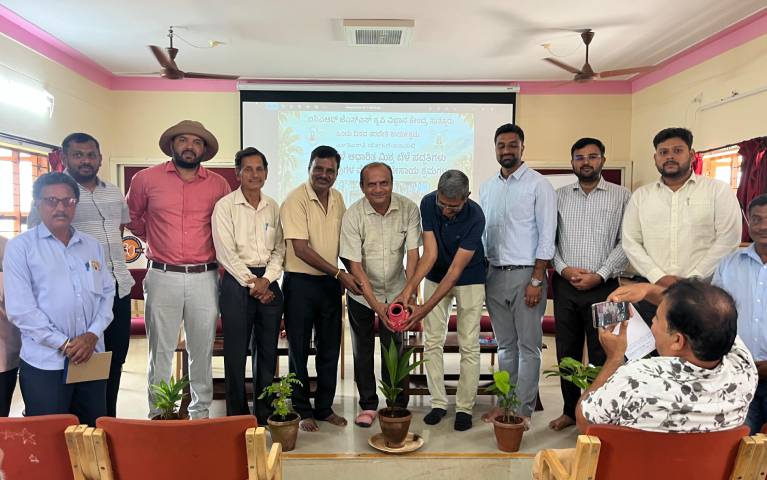
Adopt scientific spacing and mixed cropping systems in arecanut plantations: Dr. M. V. Bharatkumar
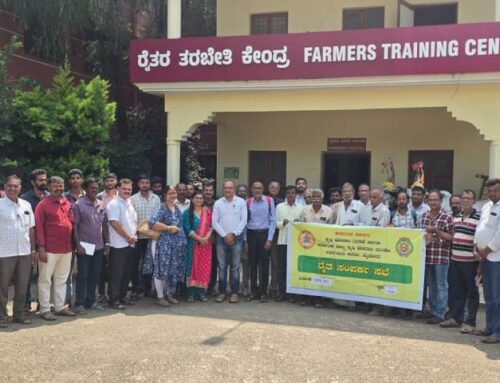
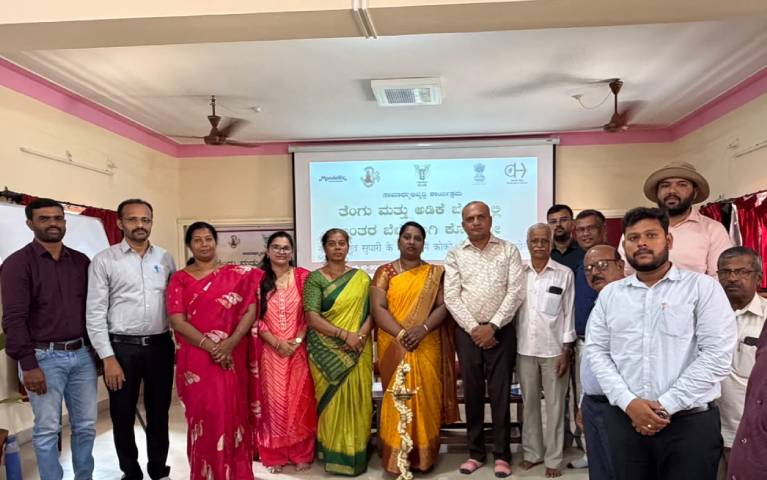
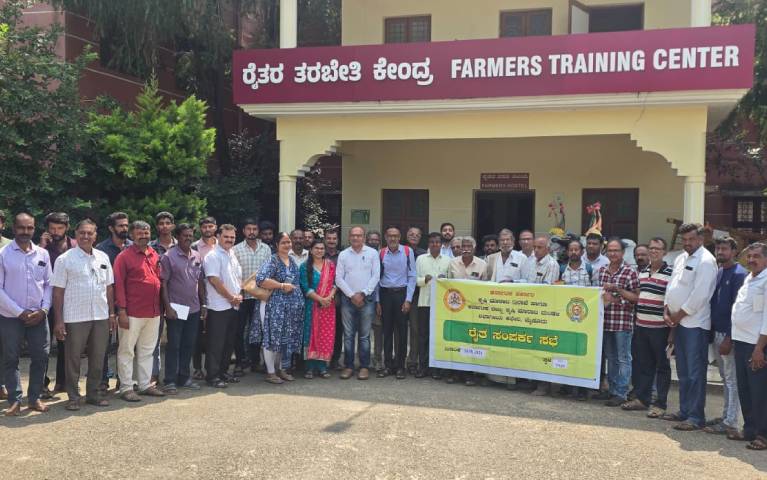
Suttur, July 20, 2026: A one-day training programme on “Arecanut-Based Mixed Cropping Systems” was organised under the SCP/TSP scheme at ICAR–JSS Krishi Vigyan Kendra, Suttur. More than 120 progressive farmers, including women farmers from Mysuru, Mandya and Chamarajanagar districts, participated in the programme and received technical guidance on scientific arecanut cultivation and mixed cropping practices.
Inaugurating the programme, Dr. Mahadevaswamy, retired Principal Scientist, Central Tobacco Research Institute, Mysuru, said that arecanut is an important commercial crop capable of providing farmers with a good income. However, its cultivation must be planned carefully, particularly by considering the availability of water.
He emphasised the importance of mulching to conserve soil moisture in arecanut plantations and urged farmers to give priority to rainwater harvesting and the efficient use of available water resources.
“Instead of depending solely on monocropping, farmers should adopt intercropping and mixed cropping systems in arecanut plantations. These systems not only provide additional income but also improve soil fertility, enhance biodiversity and ensure the long-term sustainability of plantations,” he said.
Presiding over the inaugural programme, Dr. B. N. Gyanesh, Senior Scientist and Head of ICAR–JSS Krishi Vigyan Kendra, said that although arecanut is one of the most profitable horticultural crops, farmers may face several challenges when it is cultivated continuously as a single crop.
He said that adopting appropriate intercropping and mixed cropping systems would help farmers minimise financial risks and earn a regular income throughout the year.
Highlighting the importance of moisture conservation in horticultural crops, Dr. Gyanesh advised farmers to practise mulching around the plants. Mulching helps retain soil moisture, suppresses weed growth by restricting sunlight, regulates soil temperature and improves soil fertility through the gradual decomposition of organic materials, he explained.
He urged farmers to seek guidance from Krishi Vigyan Kendra scientists, follow scientific recommendations and adopt modern agricultural technologies to improve productivity and profitability.
Progressive farmer Dr. Chandrachuda of Mysuru and retired Regional Forest Officer Shri Huchaiah of Mysuru participated in the programme as special guests.
Dr. M. V. Bharatkumar, Head of the Agricultural Research Station, Arsikere, and horticultural scientist, participated as the resource person and provided comprehensive information on scientific arecanut cultivation.
He explained important technical aspects such as suitable soil and climatic conditions, improved varieties, establishment of quality nurseries, selection of mother palms, land preparation, appropriate spacing, planting methods, irrigation management, integrated nutrient management, and integrated pest and disease management.
Dr. Bharatkumar advised farmers to maintain the recommended spacing while establishing arecanut plantations and to select intercrops based on soil conditions, water availability, shade requirements and market demand.
He said that crops such as banana, papaya, drumstick, black pepper, cardamom, cocoa, coffee, nutmeg, clove and fenugreek could be incorporated appropriately into arecanut-based mixed cropping systems. Such crop combinations promote efficient utilisation of land and other resources, provide additional income, reduce cultivation risks and contribute to the development of sustainable farming systems.
He also presented examples of successful mixed cropping models and created awareness among farmers about selecting suitable combinations of crops for their plantations.
During the programme, farmers were introduced to the Kisan Sarathi digital platform developed by the Indian Council of Agricultural Research. Scientists explained that the platform enables farmers to access scientific agricultural information and communicate with agricultural experts more effectively.
Farmers were informed that the platform provides access to crop-specific cultivation practices, identification and management of pests and diseases, weather-related information, soil and nutrient management guidance, expert advice, government schemes, training programmes, agricultural publications and updates on modern technologies.
The Kisan Sarathi application was installed on the mobile phones of participating farmers, and practical training was provided on registration and usage. Farmers were guided on entering their names, mobile numbers and crop details and were shown how to access the various services available through the application.
Scientists explained that the platform would be particularly useful for obtaining timely expert advice when crop-related problems arise and for receiving scientific information directly from ICAR institutions. A majority of the participating farmers successfully installed the application and completed the registration process.
Scientists of the Krishi Vigyan Kendra, Dr. Vinay, Dr. Prasad, Dr. Deepak, Dr. Rakshit, Smt. Divya and Shri Shamraj, were present.
More than 120 farmers and women farmers from Mysuru, Mandya and Chamarajanagar districts benefited from the scientific information and practical guidance provided during the training programme.


Leave A Comment